Social Skills Series: Apologizing

Next up in this Social Skills Series is ApologizingIf you need a reminder on what social skills are and why they’re important, read Social Skills Series: Introduction.

There has been a lot of conflicting views on apologizing lately. Do you force an apology? Do you not? Honestly, I can see both sides. Forcing kids to apologize and recite their apology script doesn’t seem genuine. However, it’s an important skill to learn! Even though it might sound inauthentic, they’re still learning and practicing, which will make it more likely that they will use this skill in the future. My personal and professional opinion is that kids should be taught and prompted to apologize when they do something that causes some kind of harm to others.

Why is apologizing so important? Apologizing is incredibly important in repairing and maintaining relationships. It is inevitable that we will do something that hurts others. Even with the absolute best of intentions, humans do hurtful things to each other… or do things that are perceived in a hurtful way. It happens. Without an apology, it is hard to make a repair to the relationship. To keep relationships healthy, apologies are key. I also think apologies are important for teaching us to take responsibility for our actions, and in validating the feelings of others.

A “trendy” topic lately has been emotional intelligence – you can read about it on the Psychology Today website here. Empathizing with others is one of the skills included in emotional intelligence. Do you have an understanding of how others are feeling, especially after you’ve done something that has hurt them? Can you relate to them?

I think empathizing should be a key factor in apologizing. It takes time, effort, and patience, but I believe it’s important to teach children not only to apologize, but to understand how the person they are apologizing to may be feeling.

What are the steps to apologizing? When teaching any social skill to children, it can be important to practice the steps to successfully completing the skill. Just like any other social skill, these steps can be individualized for your child/family, but here is a simple set of steps for apologizing:

  1. Look at the person.
  2. Apologize (with empathy if you can!)
  3. Ask if there is anything you can do to make it up to them.

That second step isn’t totally straightforward, so you will likely have to provide some examples. They may sound like this:

  • “I’m sorry that I hurt your feelings and made you wait even longer for the slide after I cut you in line.”
  • “I’m sorry I interrupted you. I’m sure that was frustrated when you weren’t able to finish what you were saying.”
  • “I’m sorry that I made you feel sad by taking your stuffed animal.”

Like many of the social skills we’ve covered, role play is one of best ways to practice apologizing. I like to role play with dolls – my daughter seems to be much more receptive to that than if I just try to act it out with her. There are all sorts of scenarios you can pretend with.

Some TIPS for practicing this social skill:

  • Practice when your child is calm/in a good mood. Practice will probably not go well if your child is grumpy or just got in trouble for something.
  • Make sure to praise you child!
  • Give constructive, positive feedback to help your child get the steps to apologizing down.
  • Try to make it fun!
  • If your child becomes uncooperative at any point, just end the practice and revisit it later.

Good luck teaching and practicing peer pressure! I’d love to hear how this went with the child(ren) in your life!

Disclaimer: I am a licensed mental health therapist, but I am not your therapist. The information in this article is for general informational purposes only. This article does not create a therapist-client relationship. If you need specific recommendations based on your individual circumstances, please consult with a mental health practitioner near you.
Social Skills Series: Asking Permission

Next up in this Social Skills Series is Asking PermissionIf you need a reminder on what social skills are and why they’re important, read Social Skills Series: Introduction.

As I sit here trying to think of a great opener for this skill, I’m really just left thinking that asking permission is not really a very exciting skill. Important, sure! Just not very exciting to talk about. And not really a social skill that most people focus on. I think Asking Permission is one of those skills that you only focus on if it’s a problem, as opposed to social skills that you proactively teach to increase your child’s success in social settings.

So why is asking permission important? The most motivating rationale for children is that they are less likely to “get in trouble” for asking permission. If my daughter turns the television on without asking, she loses all electronic time for the day. Another rationale is that it’s respectful and makes it more likely you’ll have good relationships with others. Your child may not be able to hold onto friendships if they take others’ things without asking.

One thing to note about asking permission is that you likely don’t want your child to think they have to ask permission for every single thing. Like going to the bathroom at home, or playing with their own toys, or getting a glass of water. You will have to teach your kiddo when they need to ask permission. Here are some examples of times your children may need to ask for permission:

  • Before taking something from someone’s hands
  • Before borrowing an item from someone
  • Before using particular items – television, tablet, etc.
  • Before getting a snack
  • Before getting out of your seat to use the bathroom at school
  • Before going into a sibling’s room
  • Before going outside to play

When teaching any social skill to children, it can be important to practice the steps to successfully completing the skill. These can be individualized for your child/family, but here is a simple set of steps for asking permission:

  1. Look the caregiver in the eye
  2. Ask permission by saying “Can I please…”
  3. Say “okay”
  4. If told “yes,” do it. If told “no,” don’t do it.

To practice asking permission, you can use both games and role-play:

  • Mother May I is a fun way to ask for permission. Have someone be the “mother” and the other person stand across the room and ask, “mother, may I take ___ steps.” The “mother” then gets to say “yes” or “no.” This is especially fun for kids if you let them be the “mother” in the game a few times.
  • With any board game or card gamee, you can have children ask permission before taking their turn. I’ve done this with Candyland, Chutes and Ladder, and Don’t Break the Ice, but any game where you take turns will work. “Can I please take my turn now?” Because it wouldn’t be very nice to tell them “no” they can’t have their turn, then for me to take a second turn in a row, when I tell a child “no,” I have them say “okay,” then prompt them to ask again. OR, you can also practice emotion regulation with this by having them say “okay” then pick a coping skill to use before you prompt them to ask again.
  • Practice while coloring – you can be the keeper of the crayons/markers and your child can practice asking permission by asking “can I please have the red crayon,” then saying “okay.”
  • Practice with Legos – be the keeper of the legos and have kids ask permission to use specific pieces when they need it (“can I please have the yellow Lego?”)
  • You can role-play by having your child sit in a chair and ask permission to get up to get a kleenex, use the bathroom, or get a drink (“can I please get up and get a drink?”)
  • You can also role-play by playing with toys and having your child ask permission to play with a toy your using (“can I please play with that?”)

Some TIPS for practicing this social skill:

  • Practice when your child is calm/in a good mood. Practice will probably not go well if your child is grumpy or just got in trouble for something.
  • Make sure to praise you child!
  • Try to make it fun!
  • If your child becomes uncooperative at any point, just end the practice and revisit it later.

There are lots of ways to practice this – I’d love to hear the fun ways YOU come up with to practice! Please share in the comments!

Some TIPS for practicing this social skill:

  • Practice when your child is calm/in a good mood. Practice will probably not go well if your child is grumpy or just got in trouble for something.
  • Make sure to praise you child!
  • Try to make it fun!
  • If your child becomes uncooperative at any point, just end the practice and revisit it later.

Disclaimer: I am a licensed mental health therapist, but I am not your therapist. The information in this article is for general informational purposes only. This article does not create a therapist-client relationship. If you need specific recommendations based on your individual circumstances, please consult with a mental health practitioner near you.

Social Skills Series: Standing Up For Yourself

The next social skill in this Social Skills Series is Standing Up For YourselfIf you need a reminder on what social skills are and why they’re important, read Social Skills Series: Introduction.

I haven’t found “Standing Up For Yourself” or “Being Assertive” on many social skills lists, but I believe this is an important one. This is also near and dear to my heart, as my soft-spoken, mild-mannered kiddo struggles to be assertive and stand up for herself.

Some may disagree, but I think ideally, we wouldn’t necessarily need to stand up for ourselves. Wouldn’t it be nice it no one ever cut in line? Or if everyone would include and share without needing an assertive prompt? It would be nice if everyone gave good body space all the time, or if nobody every touched our things without asking. Wouldn’t that be awesome? Maybe this is ideal, but it definitely isn’t realistic. I’ve seen other kids cut in line in front of my girl, who was waiting patiently for her turn. I’ve seen other kids come and grab one of her toys without asking. As an adult, I’ve had other adults cut in front of me in line at the grocery store. Just this week, I was standing watching my daughter’s dance class and stepped away for 15 seconds to remind my girl to change her shoes. In that 15 seconds, another mom stepped into my place, so I was unable to watch any more.

When this type of stuff happens, do we HAVE to say something. Absolutely not. We have to pick and choose our battles. Honestly, this is a social skill I struggle with! I loathe confrontation and find it difficult to be assertive (now we all know where my daughters gets it…). Standing up yourself can be hard! But when we decide it’s important, it’s good to have the skill and confidence to assertively stand up for ourselves.

Why is standing up for yourself important? It builds confidence and can boost your self-esteem. It also helps build respect for yourself, and for others. It can also decrease the likelihood of people testing their limits with you (if they know you’re going to be assertive when they cut in front of you, they are likely to stop doing so).

For practicing standing up for yourself and being assertive, role-play is going to, once again, be your best option. Kids learn well by doing. Here’s some scenarios you can practice.

  • Have your child pretend they are in line for something (water fountain, bathroom, lunch line, etc.) and you can pretend to be a peer that cuts in line ahead of them. Have your child practice saying (with a strong voice) something like, “no thank you, please go to the back of the line” or “no thank you, I was in line before you.”
  • Have your child sit at the table or on the floor and play with some toys (legos, action figures, etc.). You can then walk up and take one without asking. Have your child practice saying (again, strong voice) something like, “no thank you, wait your turn please” or “no thank you, I do not want to share right now.”
  • Have your child sit or stand anywhere, then come up and sit or stand RIGHT next to them – invading their body space. Have your child practice saying (strong voice) something like, “body space please” or “please give me space.”
  • Have your child sit or stand, then walk up and call them a name (I don’t like to use “real” bad names, I like to use funny labels, like “fluffernutter” or something that isn’t actually mean). Have you child practice saying (strong voice) something like, “please don’t call me that” or “I don’t like when you do that,” or “no thank you, my name is _____.”

Some TIPS for practicing this social skill:

  • Practice when your child is calm/in a good mood. Practice will probably not go well if your child is grumpy or just got in trouble for something.
  • Make sure to praise you child!
  • Try to make it fun!
  • If your child becomes uncooperative at any point, just end the practice and revisit it later.

Good luck! Can you think of other situations to practice? If so, please share in the comments!

Disclaimer: I am a licensed mental health therapist, but I am not your therapist. The information in this article is for general informational purposes only. This article does not create a therapist-client relationship. If you need specific recommendations based on your individual circumstances, please consult with a mental health practitioner near you.

Social Skills Series: Sharing

The next social skill in this Social Skills Series is SharingIf you need a reminder on what social skills are and why they’re important, read Social Skills Series: Introduction.

Sharing is not fun for kids. Just about every kid I’ve known or worked with struggles to share. Adults struggle to share too. Why? When we like something, we want it for ourselves and we don’t want to have to wait and watch while someone else uses it. My daughter loves to play dolls with others, but she almost never lets someone else play with her favorites. Another example, if I’m being transparent, is that I do not like to share my chocolate (that I bought just for me) with others. I still share, but it is hard!

Should we be forcing children to share? That’s difficult and there are many who would say “yes,” and many who would say “no.” I’m of the opinion that we should encourage sharing, but not force it. If you disagree with me, that’s okay. Everyone is entitled to their opinion, and, honestly, I can see benefits of both sides. Whether or not you think sharing should be forced, it’s important to talk about sharing, provide rationales, and practice.

What are rationales for sharing? One of the most motivating rationales is that if you share with others, they are more likely to share with you. Another rationale is that others are more likely to want to be your friend if you share with them. A third rationale is that it usually helps others feel happy when we share.

A great way to introduce social skills to kiddos is with a book. I love the Berenstain Bears series (have since I was a child!) and The Berenstain Bears Learn to Share is a great way to introduce sharing. Click here for more information (I make no money off sharing this with you). I’ve seen this being read aloud on YouTube as well, so you can search for it there and let your kids watch/listen.

You can practice sharing with just about any fun game, toy, or object. You can practice sharing a single set of crayons/markers, and ask if your kiddo will share specific colors with you. While playing with dolls, you can ask your child to share their preferred doll, by letting you play with it for a few minutes. You can also share snacks, by giving your child a snack, then asking them to share half. Practice sharing play dough, practice sharing a fork at lunch time, practice sharing a ball while playing outside, practice sharing legos, practice sharing a tablet, practice sharing a paintbrush, practice sharing a kite… there are lots of options!

Some TIPS for practicing this social skill:

  • Practice when your child is calm/in a good mood. Practice will probably not go well if your child is grumpy or just got in trouble for something.
  • Make sure to praise you child!
  • Try to make it fun!
  • If your child becomes uncooperative at any point, just end the practice and revisit it later.

Good luck! Drop a comment with any other fun ideas for practicing this important social skill!

Disclaimer: I am a licensed mental health therapist, but I am not your therapist. The information in this article is for general informational purposes only. This article does not create a therapist-client relationship. If you need specific recommendations based on your individual circumstances, please consult with a mental health practitioner near you.

Social Skills Series: Respecting Personal Space

The next social skill in this Social Skills Series is Respecting Personal SpaceIf you need a reminder on what social skills are and why they’re important, read Social Skills Series: Introduction.

Let’s admit it… most kids are not great with respecting others’ personal space. My daughter sometimes tries to kiss her friends on the lips when saying “goodbye”! I have also had kids that I hardly know, come up to me at the park and sit on my lap or hold my hand. And have you seen how closely some kids stand in line next to other kids? I’ve seen kids with noses right up against the backs of the person in front of them.

Most kiddos don’t seem to mind having other kids up right next to them, but eventually they will need to learn how to give appropriate body space. Can you imagine if I stood an inch behind the person in front of me at the grocery store checkout line? Or if an adult walks up to a stranger adult at the park and tried to hold their hand? Honestly, thinking about it makes me laugh and I think someone out there should do some sort of social experiment… or likely someone already has (if you know about one, link it in the comments for me for entertainment purposes!).

So why is it important to respect others’ personal space? For one… germs. It’s easier to spread germs to others when you’re standing or sitting right up next to them. The kids I know don’t really care about germs, so another rationale is that it will be easier to make and keep friends if you can respect others’ space. Some kids really don’t like others being close to them, so will be “turned off” by someone who invades their space. Others will be more comfortable around you if you respect their personal space.

A great way to introduce social skills to kiddos is with a book. Julia Cook has an amazing book called Personal Space Camp (click here for more information) that introducing this social skill. It’s a super fun, entertaining book for kids.

You can decide how much “space” your child should give others. I’ve heard some parents explain that kids should pretend they have a hula hoop around them, and make sure they stay far enough away that others’ aren’t inside that hula hoop space. I usually just say to keep an arms length away from others. For a fun way to illustrate this, you can have your kiddo put their arms out, then spin around slowly in a circle.

To practice personal space, you can either do some role-play, or use inanimate objects to practice. You can pick different social situations (waiting in line at the slide, walking through hallways, sitting in a circle, dance party, etc.) and practice giving appropriate personal space for those situations – either with yourself or with stuffed animals/dolls/action figures. You can practice asking for “more body space please” when the person (or stuffed animals) you are practicing with stands too closely to you.

Some TIPS for practicing this social skill:

  • Practice when your child is calm/in a good mood. Practice will probably not go well if your child is grumpy or just got in trouble for something.
  • Make sure to praise you child!
  • Try to make it fun!
  • If your child becomes uncooperative at any point, just end the practice and revisit it later.

Good luck! Drop a comment with any other fun ideas for practicing this important social skill!

Disclaimer: I am a licensed mental health therapist, but I am not your therapist. The information in this article is for general informational purposes only. This article does not create a therapist-client relationship. If you need specific recommendations based on your individual circumstances, please consult with a mental health practitioner near you.

Social Skills Series: Greeting Others

The next social skill in this Social Skills Series is Greeting Others. If you need a reminder on what social skills are and why they’re important, read Social Skills Series: Introduction.

Lately, I’ve seen many “jokes” about how the younger generations aren’t learning how to interact face-to-face, because they spend so much time on devices. I say “joke” in quotation marks, because it may be a little humorous, but it’s also really sad. Devices aren’t going away any time soon, but I truly believe that we can find balance – we can be on devices AND also know how to appropriately interact with others. One such interaction is Greeting Others.

There are many great rationales for why it’s important to greet others appropriately. For one, it’s a great way to make a first impression! If you can maintain eye contact, smile, and greet someone politely while speaking clearly, you’re likely to make a good impression on the person you’re greeting. It’s a good first step towards making a new friend, a new connection, or landing a new job. Greeting others helps us connect to those around us. It also shows that you care, and can brighten someone’s day.

With social skills, it can be helpful to break the skill down into steps. You can personalize these, but here’s an example of a set of steps for greeting others:

  • Look at the person
  • Smile
  • Say a greeting (e.g. “good morning” or “hello”)

It’s very common for kids to struggle with maintaining eye contact or a hard time speaking clearly. Or both! It doesn’t mean anything is “wrong,” it just means they need some practice.

Practicing the skill of greeting others typically involves role playing. The phrase “role playing” usually makes me roll my eyes and want to run away, but when doing this with kids, it can be so fun!

  • You can put on different shirts/hats/accessories and pretend to be other people to practice greeting each other.
  • You can use different voices/accents to practice greeting each other.
  • (or combine the first two for LOADS of fun)
  • You can also practice this with dolls or stuffed animals – pretend they are greeting each other.
  • It’s also a lot of fun (and super silly) to practice the WRONG way to greet each other – running away, closing your eyes, yelling, whispering, saying “bad morning,” etc. Kids get a kick out of this. Just make sure you follow up with practicing the “right” way.

Remember to praise and reward (optional) your child when they are successful! You want to praise every time they make it through the steps to greeting others. If they aren’t successful with all steps, praise them for the ones they got right, and give feedback on the one they didn’t (this would sound like, “Wow! You did a great job of making eye contact and smiling. Let’s try it again and can you speak a little louder this time?).

If you want to, you can use any reward – my recommendation would be to use a reward for a certain number of successes. Such as, five successful times of greeting earns a reward. You can even give a sticker for each success, then give a reward when they earn a certain number of stickers. Five stickers may equal ten extra minutes of tv time (or any other reward you want to use).

Some TIPS for practicing this social skill:

  • Practice when your child is calm/in a good mood. Practice will probably not go well if your child is grumpy or just got in trouble for something.
  • Make sure to praise you child!
  • Try to make it fun! If your child becomes uncooperative at any point, just end the practice and revisit it later.

Good luck! Drop a comment with any other fun ideas for practicing this important social skill!

Disclaimer: I am a licensed mental health therapist, but I am not your therapist. The information in this article is for general informational purposes only. This article does not create a therapist-client relationship. If you need specific recommendations based on your individual circumstances, please consult with a mental health practitioner near you.

Social Skills Series: Saying “Please” and “Thank you”

Good morning/afternoon/evening/night! The next social skill in this Social Skills Series is Saying “Please” and “Thank you.” If you need a reminder on what social skills are and why they’re important, read Social Skills Series: Introduction.

Whether or not you’ve ever said the words “social skill” in relation to saying “please” and “thank you,” most people acknowledge that those words are very important in today’s society. Does that mean everyone uses them consistently? Not at all – even adults are not always great about it. But most people would agree that it’s kind and respectful to say “please” when they want something and “thank you” when they’ve received something.

One rationale for saying “please” is that it makes it more likely that the person will say “yes.” And a rationale for saying “thank you” is that it makes it more likely people will do kind things for you next time. These are pretty solid rationales, in my opinion. Can you think of examples of a time that you were inclined to say “no,” but because the person said “please,” you said “yes” instead? I can! Just a few days ago my daughter asked for “one more time” going down the water slide. I looked at her, considered her “please,” and told her that I was saying “yes” only because she had asked so nicely and said “please.” And how many times have you given something to someone, not gotten a “thank you,” and thought to yourself, “I guess I’m done doing nice things for them” or something similar? Please and Thank You are important!

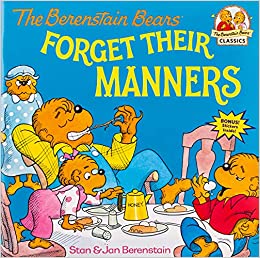
Books can be a great way to introduce skills to kids! There are two books in the Berenstain Bears series that can be read aloud to your child to introduce them to the concept of using “please” and “thank you.” One if The Berenstain Bears Forget Their Manners and the other is The Berenstain Bears Say Please and Thank You. I have not read the second one, but Forget Their Manners was a favorite of mine when I worked in a treatment facility with children.

So how to practice saying “please” and “thank you?” There are so many ways! One of the easiest ways I’ve practiced is to do a coloring activity with your child. You hold on to all of the crayons/markers/colored pencils, and when your child wants one, they must say “please” when asking and “thank you” once they’ve received. You could also practice with a small treat – carry a small baggie of m&ms or chocolate chips around, and in order to get one, your child must say “please” when asking and “thank you” once they’ve gotten one. Another idea is with a sticker book. My daughter still needs help peeling the stickers, so I can practice with her by making her ask “please” when she is ready for another sticker to put on, then saying “thank you” once I’ve given her one. Yet another option is to use building blocks of some kid – put all the blocks in a pile and before taking one, your child must ask “please,” then say “thank you” once you tell them it’s okay to take one.

Remember to praise and reward (optional) your child when they are successful! You want to praise every time they say “please” or “thank you.” Rewards are, again, optional. With each of these practice ideas, there is a positive consequence built in to the practice – they are getting a sticker for their book, getting a block to use, or getting a crayon to use. And obviously if you are having them practice saying “please” and “thank you” for a small treat, the small treat acts as a reward. If you want to, you can use another reward – my recommendation would be to use a reward for a certain number of successes. Such as, ten successful “please” and “thank you”s will earn something. You can even give a sticker for each success, then give a reward when they earn a certain number of stickers. Ten stickers may equal ten extra minutes of tv time (or any other reward you want to use).

Some TIPS for practicing this social skill:

  • Practice when your child is calm/in a good mood. Practice will probably not go well if your child is grumpy or just got in trouble for something.
  • Make sure to praise you child for saying “please” and “thank you.”
  • Kids LOVE IT when they can turn the tables – let them be in charge during the practice and praise YOU for saying “please” and “thank you.”
  • Try to make it fun! If your child becomes uncooperative at any point, just end the practice and revisit it later.

Good luck! Drop a comment with any other fun ideas for practicing this important social skill!

Disclaimer: I am a licensed mental health therapist, but I am not your therapist. The information in this article is for general informational purposes only. This article does not create a therapist-client relationship. If you need specific recommendations based on your individual circumstances, please consult with a mental health practitioner near you.

Social Skills Series: Accepting “No” For An Answer

Hi all! The next social skill in this Social Skills Series is Accepting “No” For An Answer. If you need a reminder on what social skills are and why they’re important, read Social Skills Series: Introduction.

So… accepting “no” for an answer? Talk about a hard skill for kids! Why is it so hard? Because when kids are told “no,” it’s usually in response to something that they want or want to do. It all relates back to the Four Functions of Behavior. Kids want something and when they’re told “no,” they exhibit all sorts of behaviors to try to get what they want. They may cry, whine, argue, ask again (and again and again), yell, hit, scream, etc. (P.S. Adults do this too; the last time you told another adult “no,” did they accept it the first time?)

Yesterday, my husband and I were at the pool with my daughter for almost 3 hours! We take her at least 3 times per week, so she gets to go a lot. When it was time to leave, she asked if we could stay, and I had to tell her “no.” She had a rough time accepting “no” for an answer. She whined and asked me again (twice more) if we could “please” stay. Gotta at least credit her for saying “please!”

You can certainly correct this behavior when you see it, or issue a consequence. I ended up correcting the behavior and providing a rationale about why it’s important to accept “no” (because we’re more likely to want to take her back to the pool if she can say “okay.” I could tell she still wasn’t happy, but she said “okay” and didn’t whine after that.

One important part of teaching/practicing social skills is to be very clear with your children what exactly they need to do to successfully demonstrate that skill. When I hear parents correct behavior, many times I hear them tell their child what NOT to do. “Stop whining.” “Stop arguing.” Especially with young children, it’s important to let them know WHAT TO DO instead. And saying “accept ‘no’ for an answer” isn’t real clear?

You can decide what “steps” you want your child to follow when accepting “no” for an answer. You may just want them to say “okay.” When I worked at a treatment center, the steps were look at the person and say okay with no arguing. You may want them to say “yes, ma’am” instead. Once you decide, teach your children the steps to accepting “no” for an answer, then have them repeat them back to you.

Now it’s time to practice! As with most skills, there are lots of different ways you can practice this with children. Here are a few I’ve used with my own kiddo or as a therapist:

  • Practice while playing a board game by having children ask permission for their turn – say “no” sometimes and let them practice staying “okay.”
  • When a kiddo asks for a snack, tell them that they must practice accepting “no” by saying “okay” one time before you give them the snack.
  • You can have them think of silly questions to ask (“Can I eat 89 cupcakes for breakfast?” or “Can I wear 4 different hats on my head to school?”) then saying “okay” when you tell them “no.” This is a great way to use humor to make practice fun!
  • Playing Go Fish is another super easy way to practice accepting “no” for an answer. The only thing you’ll really do differently is make sure the child says “okay” after you answer “no” when asked for a specific card.
  • You can also practice while coloring. You can be the “keeper” of the crayons/markers. When the kiddo wants a new color, they must ask nicely and say “okay” when you tell them “no.”
  • You can also have them practice accepting “no” by saying “okay” when waiting for an activity. You might draw up a chalk obstacle course, and they have to ask before they start. Or practice accepting “no” before letting them jump into the pool.

There are lots of other ways to practice this. Just think of any activity that you can make your child ask permission, then tell them “no” so they can practice saying “okay.”

Some TIPS for practicing this social skill:

  • Practice when your child is calm/in a good mood. Practice will probably not go well if your child is grumpy or just got in trouble for something.
  • Make sure to praise you child for saying “okay!”
  • Kids LOVE IT when they can turn the tables and tell YOU “no.” Sometimes it’s fun to let them do so, and then you get to model how to stay calm and say “okay.”
  • To further this practice, you can have kiddos practice staying calm by taking a deep breath before saying “okay.” This reinforces the idea of using calming skills to stay calm.
  • Try to make it fun! If your child becomes uncooperative at any point, just end the practice and revisit it later.

Good luck! Let me know in the comments what ways you’ve practiced accepting “no” for an answer with the kiddos you love!

Disclaimer: I am a licensed mental health therapist, but I am not your therapist. The information in this article is for general informational purposes only. This article does not create a therapist-client relationship. If you need specific recommendations based on your individual circumstances, please consult with a mental health practitioner near you.

Social Skills Series: Taking Turns

Welcome to the first of the social skills in the Social Skills Series (read Social Skills Series: Introduction to learn more about social skills and why I’m writing this series). I’m going to go out on a limb here and suggest that taking turns may be one of the hardest social skills for kiddos. When they like to do something, it is unbelievable difficult for them to step away and let someone else try it. I mean, honestly, it’s hard for adults too!

I’ve seen so many examples of this as a therapist and a parent. Just this morning my daughter had a play date with a sweet friend and the two of them struggled to take turns with the steering wheel on the play set. Luckily, this did not turn into major conflict for them. But a few months ago my daughter had a playdate with some school friends – there were 4 girls and only 3 balls and it got pretty rough. Yelling and “stealing” balls from someone else… eventually there were tears. Taking turns is hard!

Does your child need a diagnosis and therapy if they struggle to take turns? Absolutely not! Having difficulty with this social skills is totally developmentally appropriate. There’s no need for alarm if your child struggles to take turns while playing with others. But that doesn’t mean they wouldn’t benefit from practice!

So how do you practice taking turns? PLAY! Practice does not have to be a super boring activity. Just play something where you can practice taking turns. Some examples from my own family:

  • Take turns being the preferred doll while playing with the dollhouse. My kiddo’s favorite doll and princess is Cinderella and she always wants to “be” Cinderella. Sometimes I stress the importance of taking turns and she lets me be Cinderella for a few minutes.
  • Take turns while playing a board game. This is so easy – you just play like you normally would, but talk about taking turns and point out that you’re taking turns. So simple.
  • We also take turns playing with the dogs and their toys – we all like to throw the toys for the dogs to fetch, but we can’t all throw it each time. This is a great opportunity to talk about taking turns and to practice.
  • We also take turns while coloring or painting – when we want to use the same color, we have to take turns.

Most of these examples are things that happen in “normal” play. The difference is that we don’t normally talk about taking turns while doing it. Simply by calling attention to the social skill, and praising/encouraging your child for taking turns, it can make a world of difference.

Sometimes I’ll do something a bit different with my daughter by acting as if I refuse to take turns – I’m never mean about it, I may just say something like, “I think I want to take another turn.” Then we talk about how she would feel if I DID skip her turn. This is a great way to help kiddos develop some empathy and to understand what their friends may feel like when they don’t do well with taking turns.

Some tips for practice: Always do this when your child is in a good mood. It doesn’t usually go well if you try to practice when your child is super grumpy or after you just corrected their behavior. Also, make sure to praise and encourage them for the skill they are practicing. For example, say, “you’re doing a great job taking turns” or “isn’t it nice to take turns and play together?”

Besides practice, it is incredibly beneficial to pay attention to your child playing and correct them when they struggle to take turns. You probably can’t catch it every single time, but if you see it, walk over and talk about it! Remind them why taking turns is important and prompt them to try again!

Drop me a comment and let me know what ways you practice taking turns with your kiddos!

Disclaimer: I am a licensed mental health therapist, but I am not your therapist. The information in this article is for general informational purposes only. This article does not create a therapist-client relationship. If you need specific recommendations based on your individual circumstances, please consult with a mental health practitioner near you.

Social Skills Series: Introduction

I’m curious as to what comes to mind when someone with a non-clinical background hears the phrase “social skills.” As a therapist with a strong background in behavior modification, I’m familiar with social skills – what they are, why they’re important, how to teach them, how to reinforce them.

So what are social skills? They’re the things (skills) we do to socialize with other people. These skills can be both verbal and non-verbal, and are important for humans to learn in order to be successful building relationships with others. How do we learn social skills? Many times, we learn them through watching others and mimicking their behavior. This is such a great, mostly effort-free way for your kids to learn prosocial skills. But guess what? Kids can also learn inappropriate, negative skills from other kids (and adults!). So it can be helpful for parents to practice these skills with kids – especially those skills that you see your child needs some improvement in.

Some individual social skills include: take turns, respecting boundaries, sharing, asking for help, asking permission, saying “thank you,” saying “sorry,” waiting patiently, following directions, complimenting others, accepting “no” for an answer, resisting peer pressure, greeting others, and saying “no” to others appropriately. This is not an exclusive list by any means. There are many, many more social skills. The blog site And Next Comes L, has a list of 50 social skills, which you can find here on their site.

Why are social skills important? The “big picture” answer is to successfully build relationships with other people. Social skills are how we meet and keep friends. Social skills are how we maintain bonds with family members. Social skills help with interviews, getting jobs, and keeping jobs. Social skills are how we sell items or ideas to other people. Pretty important!

How to teach them? Yes, your children will be exposed to these skills by watching others and may mimic these skills. If you notice your child struggling with a social skills, you can model the skills for them and practice. Then you can reinforce this with praise when you see them do it well (both in practice and outside of it).

What happens if we don’t teach/practice them? We may end up with children who struggle to interact positively with others. As a therapist, I see this in some of my clients. As a parent, I see this in my own kiddo and in other kiddos we interact with. I see my daughter struggle to be a good sport when she loses a game. I see many kids struggle to take turns and wait patiently while playing at playgrounds. I see clients who struggle to show gratitude, which leaves family members feeling resentful. I see clients who have “perfectionist” tendencies struggle to ask for help when they need it.

Now, please hear me out when I say that no child will be “perfect” with social skills. I’m not of the opinion that all parents should be practicing all of these skills with their kids – we have enough to do! There’s no need for alarm if your child is still learning. Maybe they just need a little more time, socializing, and developmental progress to really nail those social skills. But if you see them struggling and it’s affecting their relationships with others, it’s a great idea to practice with them. This series is not to add to the parent load by preaching about ANOTHER thing you must do with your children. This is an informational series for parents who may see their child struggling in an area or two and want to help.

Be on the lookout for posts about individual social skills to be added! I hope to cover each social skill listed in this post. I can’t wait to hear how you’re practicing these skills with your kiddo!

Disclaimer: I am a licensed mental health therapist, but I am not your therapist. The information in this article is for general informational purposes only. This article does not create a therapist-client relationship. If you need specific recommendations based on your individual circumstances, please consult with a mental health practitioner near you.