What I Can/Can’t Control Worksheet

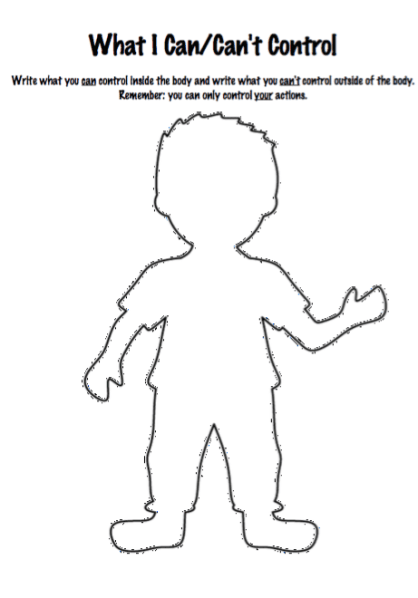
It is extremely common to hear children “blame” others for their behavior.  I’ve worked with kiddos who instantly argue with “but he did it first” when they are corrected for misbehavior.  They might be right… maybe a peer did initiate, but that doesn’t mean the child has to do the same (or retaliate).  It can take a lot of discussion to get a kiddo to acknowledge that they only have control of their own bodies and that they can choose to make good choices regardless of what others are doing around them.

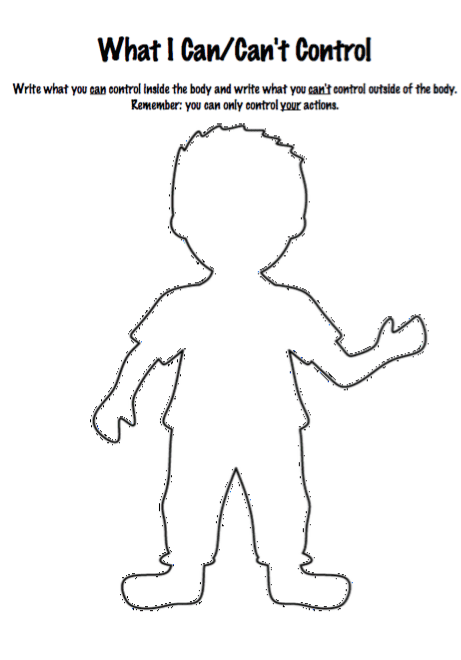
The worksheet below is to help kiddos identify things that are within their control and things that are not within their control.  I typed “to help kiddos,” but guess what?  I’ve met my fair share of adults that would benefit from thinking about this as well!

What I Can/Can’t Control Worksheet (click here to print):

Screen Shot 2018-02-08 at 8.15.50 PM

Inside Out Situation/Feeling Matching Worksheets

I know I’ve said it before, but Inside Out is such a great tool for teaching and practicing feelings identification with kiddos.  It’s a great way to get some serious learning done, but the movie characters are fun and make it more bearable for children.  Feelings identification can seem really simple to adults, but lots of children need help in order to be successful identifying how they feel.  Ultimately, the goal is to get them to then be able to regulate those emotions, but we have to start with being able to identify them first.

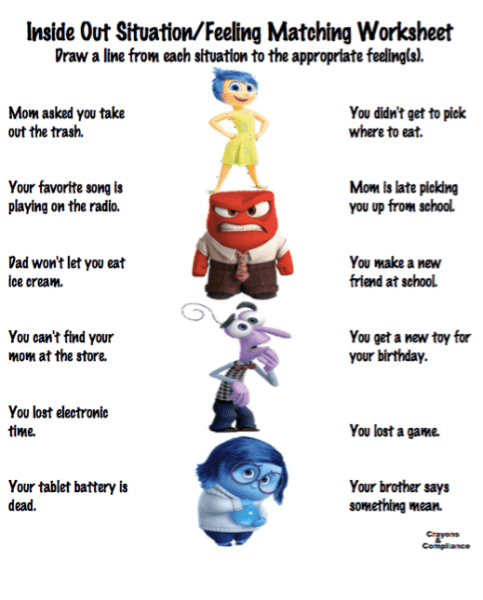
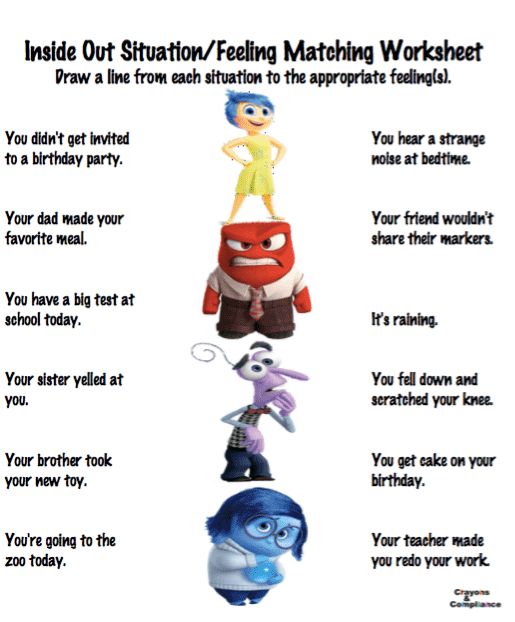
Below you can find two different worksheets which allow children to match situations to the appropriate feeling(s) that someone would feel in that situation.    Each worksheet has 12 different scenarios.  Some may trigger a few different feelings in children.  For example, there are a few situations which may make a child feel both sad and mad.  Additionally, one child might identify a feeling different from another.  For example, one child might be happy that it’s raining (maybe a kiddo who likes to jump in mud puddles) while another might feel sad that it’s raining.

I encourage any caregivers using these worksheets to be open-minded when going over this with a child.  If a child identifies a feeling that doesn’t seem to make sense to you at first, let them talk about it instead of immediately telling them they’re wrong.  Sometimes I’ve been surprised by a child’s perspective of a situation.  The different situations provide plenty of prompts to talk about feelings.  If a child doesn’t seem to be grasping a situation, it can also be helpful to role-play it and have them try to identify a feeling during the role-play.

Inside Out Matching Worksheet 1 (click link to print):

Screen Shot 2018-02-05 at 8.11.11 PM

Inside Out Matching Worksheet 2 (click link to print):

Screen Shot 2018-02-05 at 8.11.19 PM

Problem Solving Flower Worksheet

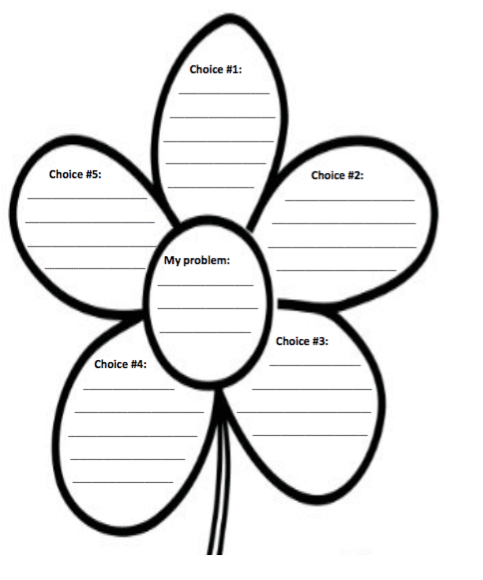
Due to the way kids’ brains develop, they’re not always great at problem-solving.  It can be difficult for them to think about all the choices they have in a situation, think about the outcomes of those situations, then make a decision based on that information.  BUT with some help from an adult, they’re usually capable of doing so… they just need some help going through the steps.  Also, a visual representation usually helps make the process more entertaining for the child.  Below, you’ll find a problem-solving worksheet that can be used to help guide a child through the problem-solving process (printable copy here).
Screen Shot 2018-01-21 at 8.09.21 PM

Start by having your child write (or write for them) the “problem” in the center of the flower.  Then, have them come up with 5 different choices they could make to try to solve their problem.  If it’s a not-so-great choice (or a TERRIBLE) one, go ahead and let them write it down.  After each choice they come up with, have them identify what the outcome might be and talk about it.  So, if their “problem” is that their brother is calling them names and the “choice” is to kick him, talk about how his/her brother might get hurt, and that your kiddo will get in trouble for kicking his/her brother.

If you need more than 5 spaces, fill up the back.  Once you and your kiddo have all the choices you can think of, sum up each choice and the outcomes, then help your kiddo pick the best option and follow through on it.

Note: this worksheet can also be used if your kiddo has ALREADY acted (and made a not-so-great choice).  Just have them write out all the choices and outcomes, pick which one would have been a better choice, then practice it.  We can’t go back in time and change what they did, but going through this will make it more likely that they’ll make a better choice if/when the same situation (or a similar one) comes up in the future.
Favorites Ice Breaker Worksheet

When I start seeing a new kiddo for therapy, I like to give them an easy assignment to do before their second session.  I usually have kiddos with emotional concerns do a worksheet pertaining to feelings (see Inside Out Emotions Ice Breaker), but for kiddos with more behavioral concerns I usually start with a “favorites” worksheet.

Having kids write down their favorites (and least favorites) is a great “ice breaker” tool for me to get to know them and start building rapport in that second session.  As a bonus, it’s also a great tool for me to use to recommend rewards (from the kiddo’s list of favorites) and negative consequences (from their list of least favorites) to the child’s parents for behavior contracts.

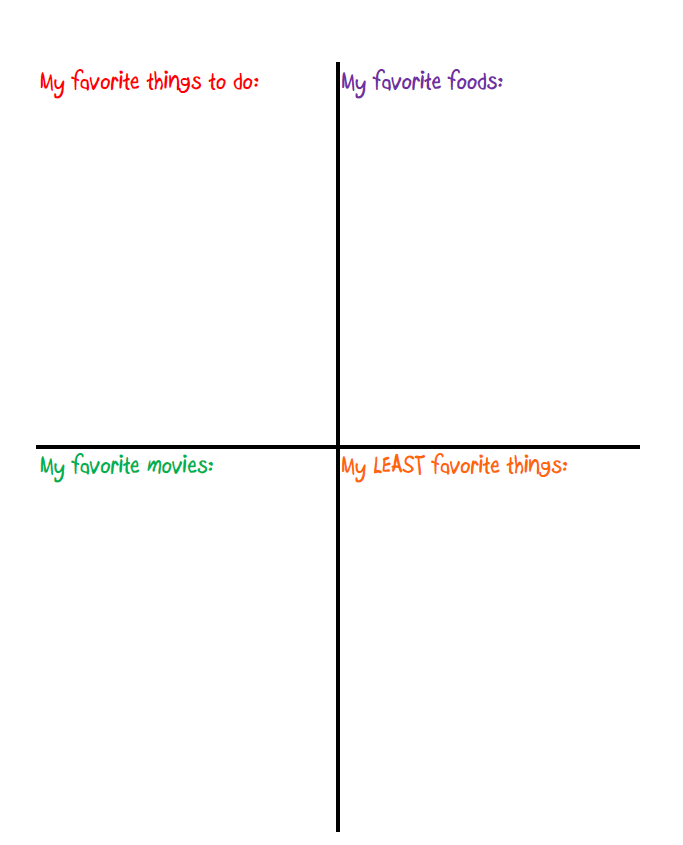
I created a super simple worksheet that I hand out to kiddos when they’re getting ready to leave that first session.  It looks like this:

Favorites screenshot


You can find a printable version here.

Inside Out Emotions Ice Breaker

When I see a kiddo for their first therapy session, I usually give them an easy, getting-to-know-you assignment to complete before their second session.  For kiddos who are dealing more with emotional issues than behavioral, I like to have them make a list of 5 things that make them feel happy, 5 things that make them feel sad, 5 things that make them feel worried, and 5 things that make them feel mad.

This list is a great way to “break the ice” and going over it is beneficial for building rapport.  It also helps give me an idea of their knowledge and awareness of emotions.  Additionally, it’s easy to fit in questions about how they cope with the situations, which also gives me an idea of how they are at coping with emotions.

To make the assignment more fun, I created an easy worksheet with the Inside Out characters for kids to take and fill out.  Some kids are turned off when they hear the words “assignment” or “homework,” but show them a piece of paper with an Inside Out character on it, and it doesn’t seem so bad. 🙂

Here’s what the worksheet looks like:Screen Shot 2018-01-01 at 7.26.19 PM

Printable version here.

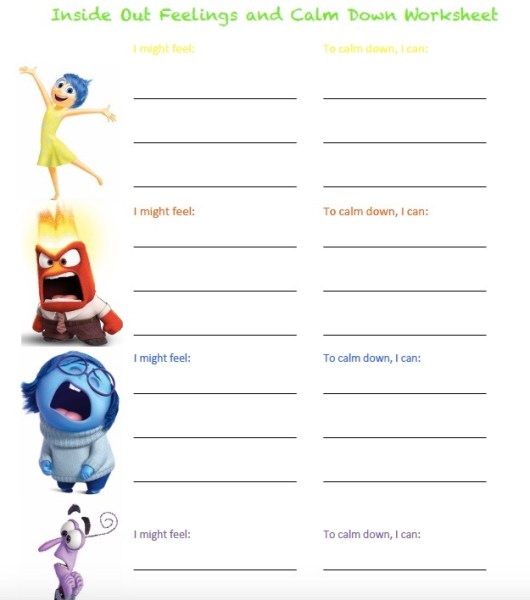
Inside Out Feelings and Calming Strategies Worksheets

love using Inside Out when working with kids on emotion identification and emotion regulation.  It’s a fun movie and kids generally have a positive response when they see any of the characters from Inside Out, which mean the activity usually goes rather well.

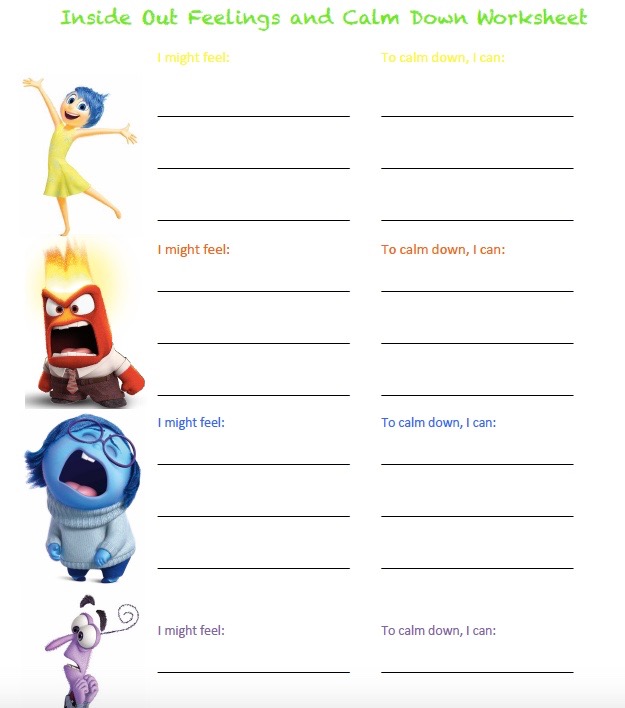
I have created this worksheet to help kids identify how they’re feeling, how their body might be feeling, and some calming strategies they can use to help calm down.  This is similar to the Inside Out Feelings Book that I posted, but this worksheet is all on one piece of paper… and the reason for that is that I thought it would be nice to print this worksheet out and put it somewhere in the home (on the fridge, maybe?) as a visual prompt from kiddos.

Screen Shot 2017-10-16 at 12.39.39 PM

Download it here: Inside Out Feelings and Calming Strategies Worksheet

What I would do is sit down and help your kiddo fill in the blanks on the worksheet – for each of the four emotions (joy, anger, fear, sadness) there are 3 lines to write in body signals (how their body feels when they feel that emotion) and 3 lines to write an appropriate calming strategy.  Some of the body signals and calming strategies might overlap, but it would probably be beneficial to make sure there’s some variety!

Once it’s all filled out, put it somewhere your kiddo can see it.  Then, when you notice your child getting upset, prompt them to go find their Inside Out Feelings Worksheet, identify how they feel (help them, if needed due to age or development), then identify a calming strategy to use to calm down.