Good morning/afternoon/evening/night! The next social skill in this Social Skills Series is Saying “Please” and “Thank you.” If you need a reminder on what social skills are and why they’re important, read Social Skills Series: Introduction.
Whether or not you’ve ever said the words “social skill” in relation to saying “please” and “thank you,” most people acknowledge that those words are very important in today’s society. Does that mean everyone uses them consistently? Not at all – even adults are not always great about it. But most people would agree that it’s kind and respectful to say “please” when they want something and “thank you” when they’ve received something.
One rationale for saying “please” is that it makes it more likely that the person will say “yes.” And a rationale for saying “thank you” is that it makes it more likely people will do kind things for you next time. These are pretty solid rationales, in my opinion. Can you think of examples of a time that you were inclined to say “no,” but because the person said “please,” you said “yes” instead? I can! Just a few days ago my daughter asked for “one more time” going down the water slide. I looked at her, considered her “please,” and told her that I was saying “yes” only because she had asked so nicely and said “please.” And how many times have you given something to someone, not gotten a “thank you,” and thought to yourself, “I guess I’m done doing nice things for them” or something similar? Please and Thank You are important!
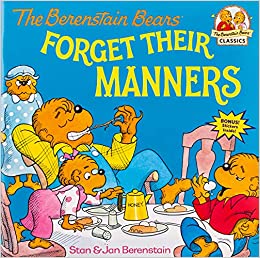
Books can be a great way to introduce skills to kids! There are two books in the Berenstain Bears series that can be read aloud to your child to introduce them to the concept of using “please” and “thank you.” One if The Berenstain Bears Forget Their Manners and the other is The Berenstain Bears Say Please and Thank You. I have not read the second one, but Forget Their Manners was a favorite of mine when I worked in a treatment facility with children.
So how to practice saying “please” and “thank you?” There are so many ways! One of the easiest ways I’ve practiced is to do a coloring activity with your child. You hold on to all of the crayons/markers/colored pencils, and when your child wants one, they must say “please” when asking and “thank you” once they’ve received. You could also practice with a small treat – carry a small baggie of m&ms or chocolate chips around, and in order to get one, your child must say “please” when asking and “thank you” once they’ve gotten one. Another idea is with a sticker book. My daughter still needs help peeling the stickers, so I can practice with her by making her ask “please” when she is ready for another sticker to put on, then saying “thank you” once I’ve given her one. Yet another option is to use building blocks of some kid – put all the blocks in a pile and before taking one, your child must ask “please,” then say “thank you” once you tell them it’s okay to take one.
Remember to praise and reward (optional) your child when they are successful! You want to praise every time they say “please” or “thank you.” Rewards are, again, optional. With each of these practice ideas, there is a positive consequence built in to the practice – they are getting a sticker for their book, getting a block to use, or getting a crayon to use. And obviously if you are having them practice saying “please” and “thank you” for a small treat, the small treat acts as a reward. If you want to, you can use another reward – my recommendation would be to use a reward for a certain number of successes. Such as, ten successful “please” and “thank you”s will earn something. You can even give a sticker for each success, then give a reward when they earn a certain number of stickers. Ten stickers may equal ten extra minutes of tv time (or any other reward you want to use).
Some TIPS for practicing this social skill:
- Practice when your child is calm/in a good mood. Practice will probably not go well if your child is grumpy or just got in trouble for something.
- Make sure to praise you child for saying “please” and “thank you.”
- Kids LOVE IT when they can turn the tables – let them be in charge during the practice and praise YOU for saying “please” and “thank you.”
- Try to make it fun! If your child becomes uncooperative at any point, just end the practice and revisit it later.
Good luck! Drop a comment with any other fun ideas for practicing this important social skill!
Disclaimer: I am a licensed mental health therapist, but I am not your therapist. The information in this article is for general informational purposes only. This article does not create a therapist-client relationship. If you need specific recommendations based on your individual circumstances, please consult with a mental health practitioner near you.
 Krista H Counseling