Inside Out Behavior Charts

With all the other Inside Out worksheets and all the other behavior charts I’ve done, I cannot believe I haven’t done an Inside Out behavior chart/contract… so here it is!

Behavior Contracts can be a really useful tool for caregivers to use when trying to increase or decrease a behavior.  Some benefits include:

  • Behavior contracts help caregivers and children keep track of the behavior and the reward.
  • Kids can get involved in filling it out as the day goes by – this is motivating for them!
  • You can modify them as time goes on by changing the reward or making it a little harder to earn the reward.
  • Well-written behavior contracts have very specific expectations, so there’s no question as to whether a child earned the reward or not.

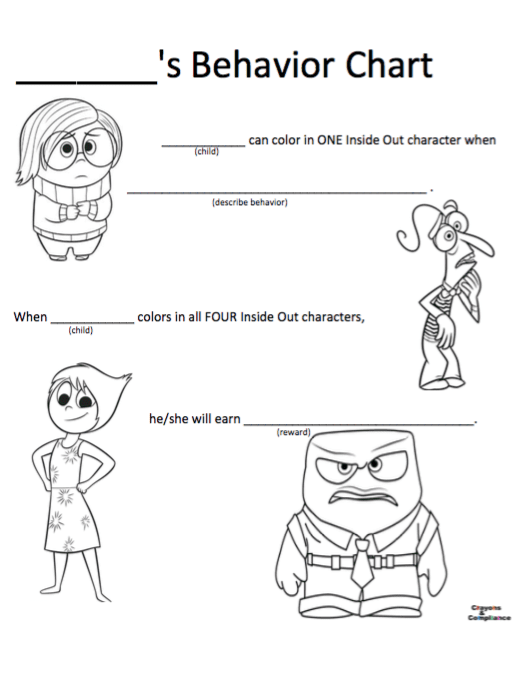
I have created three different Inside Out behavior charts for parents to use.  They are fill-in-the-blank so that you can insert your child’s name, specify what the goal behavior is, and specify a reward.

You also get to specify the length of time to complete the chart – so you may decide that your child has 3 opportunities over the course of a day.  Or you may decide they have one opportunity per day, so you’d use the 5-character chart over the course of a work week.  These can also be used as chore charts – you’d just write chores in instead of a behavior.

Some tips:

  • Try to use proactive language.  Instead of “Krista will not swear,” use “Krista will use nice words all day.”  Or instead of “Krista will not run,” use “Krista will walk” or “Krista will use walking feet.”
  • BE AS SPECIFIC AS POSSIBLE
  • Pre-teach the contract to your child to make sure they understand it.


3-character Inside Out Behavior Chart (click here to print):

Screen Shot 2018-02-08 at 9.25.12 PM

4-character Inside Out Behavior Chart (click here to print):
Screen Shot 2018-02-08 at 9.25.22 PM

5-character Inside Out Behavior Chart (click here to print):
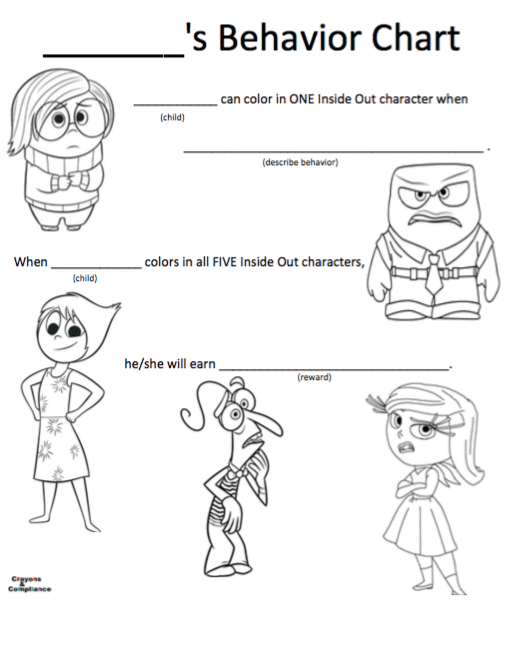
Screen Shot 2018-02-08 at 9.25.35 PM

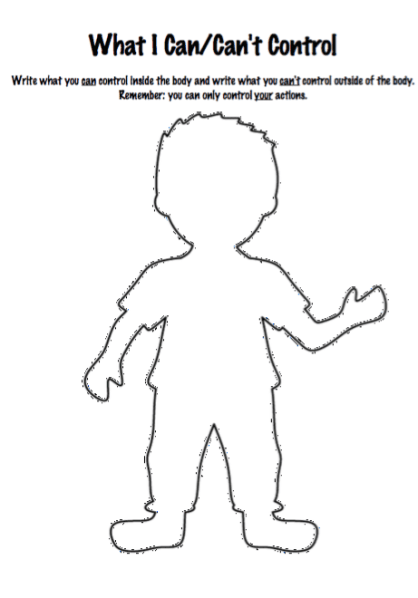
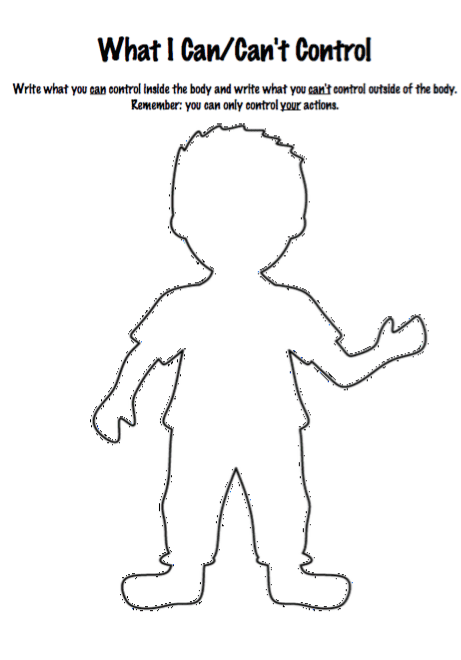
What I Can/Can’t Control Worksheet

It is extremely common to hear children “blame” others for their behavior.  I’ve worked with kiddos who instantly argue with “but he did it first” when they are corrected for misbehavior.  They might be right… maybe a peer did initiate, but that doesn’t mean the child has to do the same (or retaliate).  It can take a lot of discussion to get a kiddo to acknowledge that they only have control of their own bodies and that they can choose to make good choices regardless of what others are doing around them.

The worksheet below is to help kiddos identify things that are within their control and things that are not within their control.  I typed “to help kiddos,” but guess what?  I’ve met my fair share of adults that would benefit from thinking about this as well!

What I Can/Can’t Control Worksheet (click here to print):

Screen Shot 2018-02-08 at 8.15.50 PM

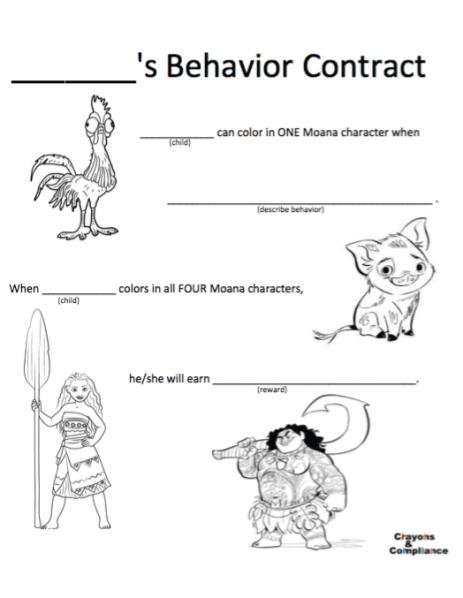
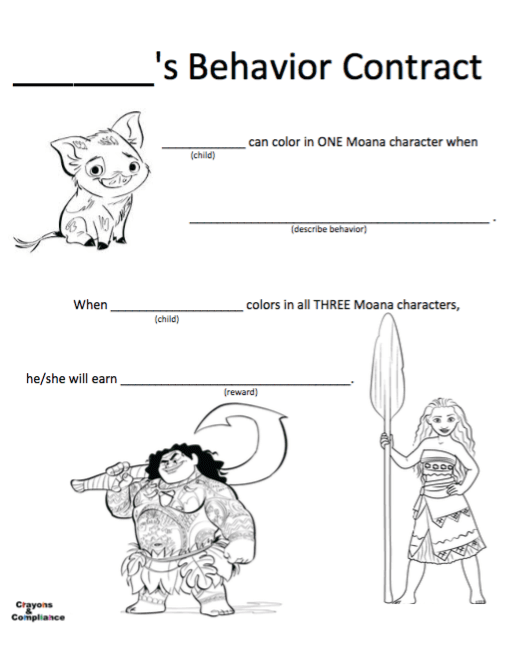
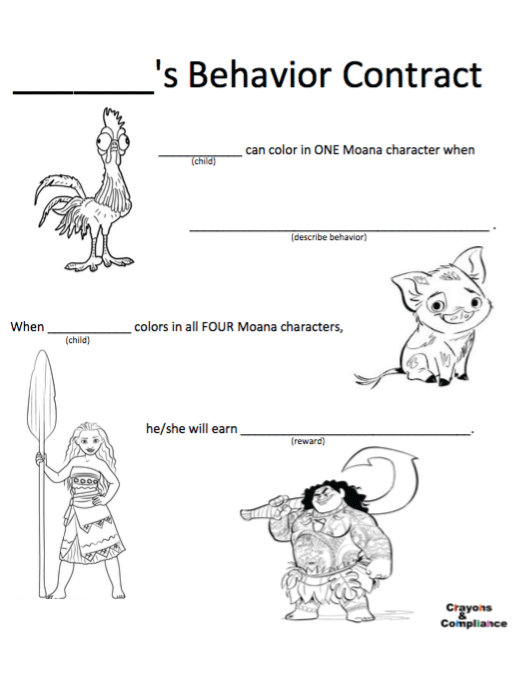
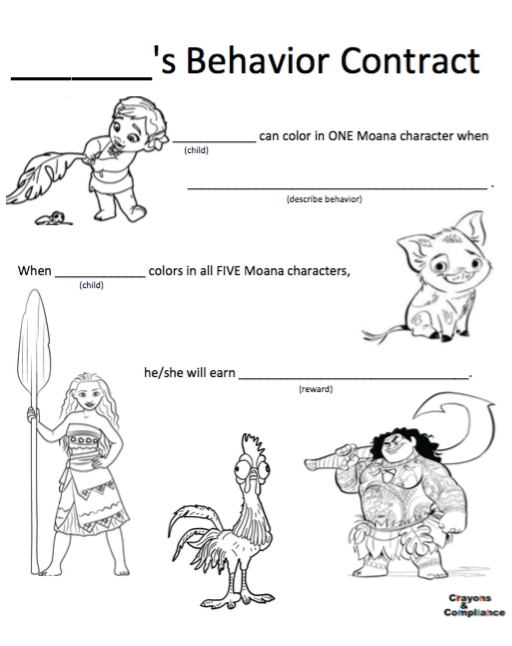
Moana Behavior Contracts

I finally got around to making some Moana behavior contracts… YOU’RE WELCOME.  Sorry, I couldn’t resist.  🙂

Behavior Contracts can be a really useful tool for caregivers to use when trying to increase or decrease a behavior.  Some benefits include:

  • Behavior contracts help caregivers and children keep track of the behavior and the reward.
  • Kids can get involved in filling it out as the day goes by – this is motivating for them!
  • You can modify them as time goes on by changing the reward or making it a little harder to earn the reward.
  • Well-written behavior contracts have very specific expectations, so there’s no question as to whether a child earned the reward or not.

I have created three different Moana behavior contracts for parents to use.  They are fill-in-the-blank so that you can insert your child’s name, specify what the goal behavior is, and specify a reward.

You also get to specify the length of time to complete the chart – so you may decide that your child has 3 opportunities over the course of a day.  Or you may decide they have one opportunity per day, so you’d use the 5-character chart over the course of a work week.  These can also be used as chore charts – you’d just write chores in instead of a behavior.

Some tips:

  • Try to use proactive language.  Instead of “Krista will not swear,” use “Krista will use nice words all day.”  Or instead of “Krista will not run,” use “Krista will walk” or “Krista will use walking feet.”
  • BE AS SPECIFIC AS POSSIBLE
  • Pre-teach the contract to your child to make sure they understand it.


Screen Shot 2018-02-03 at 8.33.33 PM

For a 3-character Moana behavior chart, click here.

Screen Shot 2018-02-03 at 8.33.41 PM

For a 4-character Moana behavior chart, click here.

Screen Shot 2018-02-03 at 8.35.52 PM

For a 5-character Moana behavior chart, click here.


Problem Solving Flower Worksheet

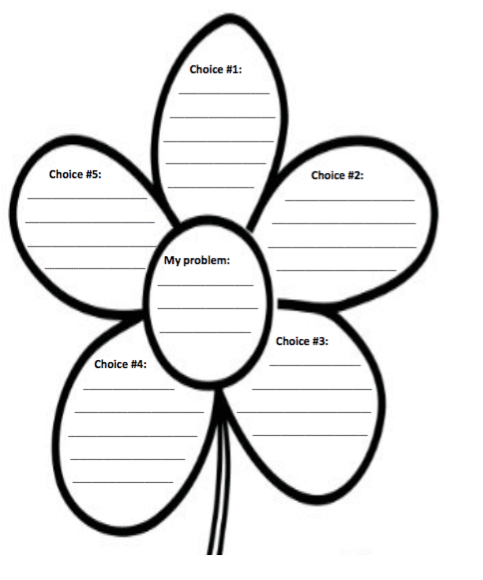
Due to the way kids’ brains develop, they’re not always great at problem-solving.  It can be difficult for them to think about all the choices they have in a situation, think about the outcomes of those situations, then make a decision based on that information.  BUT with some help from an adult, they’re usually capable of doing so… they just need some help going through the steps.  Also, a visual representation usually helps make the process more entertaining for the child.  Below, you’ll find a problem-solving worksheet that can be used to help guide a child through the problem-solving process (printable copy here).

Screen Shot 2018-01-21 at 8.09.21 PM

Start by having your child write (or write for them) the “problem” in the center of the flower.  Then, have them come up with 5 different choices they could make to try to solve their problem.  If it’s a not-so-great choice (or a TERRIBLE) one, go ahead and let them write it down.  After each choice they come up with, have them identify what the outcome might be and talk about it.  So, if their “problem” is that their brother is calling them names and the “choice” is to kick him, talk about how his/her brother might get hurt, and that your kiddo will get in trouble for kicking his/her brother.

If you need more than 5 spaces, fill up the back.  Once you and your kiddo have all the choices you can think of, sum up each choice and the outcomes, then help your kiddo pick the best option and follow through on it.

Note: this worksheet can also be used if your kiddo has ALREADY acted (and made a not-so-great choice).  Just have them write out all the choices and outcomes, pick which one would have been a better choice, then practice it.  We can’t go back in time and change what they did, but going through this will make it more likely that they’ll make a better choice if/when the same situation (or a similar one) comes up in the future.

Should You Let Your Child “Earn Back” a Privilege?

I recently was asked if it’s “Ok” to let a child earn back electronic time that was taken away as a negative consequence due to behavior.  My opinion on the subject is that it’s appropriate, but only sometimes (like, once in a blue moon!).  Here’s my stipulations:

  • Don’t get into a habit of letting them “earn back” a privilege.

You took that privilege away for a reason!  Regularly letting a child earn back a privilege will make that consequence seem less severe for them.  Why be upset about losing a privilege if you know you’re probably going to earn it back?  This then decreases motivation to choose positive and pro-social behaviors.  It all comes down to follow through.  Let’s look at an example for adults: If my boss tells me that I have to stay late every time I hand in a report late, but almost every time he lets me leave early anyways…?  Guess what, I’m not going to be all that motivated to hand in my report on time… because I’ve learned that there’s no follow through on the consequence.

  • Don’t undo the entire consequence.

When using negative consequences, the best (fastest) way to decrease negative behavior is to use a negative consequence every single time it happens.  So if a parent does decide to let a child “earn back” something, don’t let them earn ALL of it back.  For example, if your child lost 15 minutes of electronic time, give them maybe 10 or 5 back.  Or it they lost ALL electronic privileges (computer, phone, Xbox, etc.), pick ONE device that they can use.

  • IF you are going to let them earn back a privilege, make sure they’ve gone above and beyond to earn it.

 Your child should do something EXTRA special and out of the ordinary in order to earn that privilege back.  Maybe your kiddo didn’t do their chores and lost TV time for the day, but later did their normal chores AND extra chores to.  Maybe your child hit their sibling and lost phone and computer privileges, but apologized (without being prompted) to their sibling and helped them with a task.

One last hint: if your child comes to expect to earn their privileges back (i.e., by asking “so do I get my time back since I apologized to my sister?”), then you’re likely letting them earn back privileges too often.  Also… the answer to that question should be “no.”  Don’t give in if your kiddo asks for their negative consequence to be undone!


Crash Course on the Four Functions of Behavior

There is a purpose behind all behavior; sometimes the purpose is fairly obvious and other times it can be hard to tell why someone is behaving a certain way.  There are 4 general functions of behavior and they are Tangibles, Escape/Avoidance, Attention, and Sensory.  I have created a (very colorful!) informational handout that summarizes the four functions of behavior.  This can be very helpful for therapists, teachers, and parents.

Screen Shot 2017-12-18 at 4.36.13 PM

You can find the file to print here.

Tangibles is when someone exhibits behavior in order to get something. Escape is when someone exhibits behavior in order to get OUT of something. Attention is when someone exhibits behavior to get attention (NOTE: to many kids, negative attention is better than no attention, so they may act up to get the attention from getting into trouble). Lastly, Sensory is when someone exhibits a behavior because it helps them cope with an uncomfortable feeling.

Sometimes it’s easy to determine the function of behavior. Sometimes it’s not. For tips on how to identify the function of behavior, read the blog post Tips for Identifying what “Function” is Fueling Your Child’s Behavior. Remember that this can be tricky stuff, and seek the help of a professional if you need it!

Disclaimer: I am a licensed mental health therapist, but I am not your therapist. The information in this article is for general informational purposes only. This article does not create a therapist-client relationship. If you need specific recommendations based on your individual circumstances, please consult with a mental health practitioner near you.