
What to Do If Your Child Talks About Suicide and Self-Harm
October was Suicide Awareness month… I’m 15 days late, but felt like this would be a good topic for a blog post. I know it’s not a fun topic to think about, but I believe every parent can benefit from knowing what to do if (just in case) their child says they are thinking about self-harm or suicide (or attempting either).
First and most importantly… ASSESS FOR SAFETY. Do not leave your child unsupervised unless you know they are safe. If you feel like your child needs help right away, get help immediately! Call 911 or call the National Suicide Prevention Hotline at 1-800-273-8255. Your child may need to be taken to and admitted to an inpatient behavioral hospital – I know that sounds scary, but if they don’t get the help they need, the result could be devastating. Always err on the side of caution.
If you believe your child is not in immediate danger, it’s still a good idea to keep an eye on them and remove anything they may use to harm themselves (think razors, medications, knives, any firearms in the home, etc.). They would also benefit from talking to a professional, whether it’s a therapist (sometimes referred to as counselors or mental health practitioners) or a psychologist. A professional will be able to help your kiddo figure out why they’re feeling this way and what they can do to feel better. A professional will also likely be able to work with you, as a parent, to discuss what specifically you can do for your child.
Here’s some other things to keep in mind.
- It’s important for parents to remain calm (at least on the outside). The last thing you want is for your response to make your child feel like they cannot talk to you about these tough topics. Even though it’s uncomfortable, you WANT your child to be able to come to you to discuss self-harm and suicidal thoughts. If they feel like they can’t talk to you, you won’t know about it and you won’t be able to help. Thank them for telling you, empathize with them, and let them know you’re on their team and will do everything in your power to help.
- Don’t dismiss your child’s thoughts/statements as them just being dramatic or seeking attention. Even if that is the case, you always want to take it seriously. Again, err on the side of caution.
- Seek support yourself – whether it’s a spouse, friend, co-worker, pastor/priest, or therapist. It can be extremely helpful to sit with someone and talk about this situation and how you’re feeling about your child disclosing thoughts of suicide or self-harm.
Using Rewards and Consequences at Home to Reinforce School Behavior
It’s very, very common for me to hear from parents that their child is struggling with behavior at school, but is a great kid at home. I’ve had a lot of frustrated parents in my office because they just don’t know what to do. Unfortunately, there can be a lot of barriers in the school system, including teachers with too many kids in their classroom. I’ve also heard some kids name “punishments” at school that are actually positively reinforcing their negative behavior… this isn’t necessarily because the school is clueless; sometimes what is “punishing” for one kiddo can be reinforcing for another.
So what can you, as a parent, do? One thing you can do is use a reward or consequence at home for your child’s behavior at school. This would require you to work with your kiddo’s teacher to somehow (phone call, email, note sent home, etc) get a message EACH DAY from the teacher about how the child’s day went. TIP… you’re going to want to pick one or two “problem behaviors” to get feedback on – this could be aggression, compliance with schoolwork, or anything else your kiddo might be struggling with – make sure your child’s teacher knows what specifically to report on. I’ve had a mom send a “smiley chart” to school, with the teacher’s approval, to be completed each day. I’ve also had moms who just get a short email update from the teacher.
From there, you get to decide whether you want your child to earn something extra if they behaved well, or if they lose a privilege or earn some other kind of consequence if they displayed any negative behaviors. A few examples:
- Reward: Child can earn an extra 30 minutes of electronics time if the teacher says they did well that day.
- Reward: Child can earn a special after-school snack if the teacher says they did well that day.
- Reward: Child can stay up 10 minutes late if the teacher says they did well that day.
- Consequence: Child has to complete an extra chore if the teacher reports negative behavior.
- Consequence: Child loses television time if the teacher reports negative behavior.
- Consequence: Child has to complete an extra math/reading/writing worksheet if the teacher reports negative behavior.
Pick something that you know will motivate your child, give them a heads up about the change, then be as consistent with it as possible! Eventually, once your child is successful, you will want to fade the consequence or reward. So you might start offering a reward every other day instead (for good behavior on both days), then eventually just once per week (for good behavior 5 out of 5 days per week).
*Note: I’m not recommending that all parents use a reward/consequence system for school behavior… this is more for the kiddos who are struggling with something specific at school*
Finding Balance: Teaching Your Child to be Well-Behaved While Still Letting Them Be a Kid
I was in church on Sunday, sitting near the end of the pew and a little girl walked over to the side, in the middle of the service, and admired the way the stained glass window reflected colors on her drawing. She would put it on the floor and giggle, then pick it up, then put it back down and giggle again. After only 30 seconds or so her mom walked up and, looking embarrassed, took her daughter back to their seats. Let me be clear: I’m not mommy-shaming here. That mom didn’t do anything wrong. In fact, I would have probably done the same thing in that situation. It was a church service and I’m sure she didn’t want her daughter to be a distraction.
But I couldn’t help but think about that little girl… it’s possible that she perceived she was doing something wrong. She was in complete awe and wonder over the reflections of the stained glass and it’s a shame that it was interrupted… though maybe it was necessary at the time.
Another story… at my very first month of an internship I was working in a therapeutic setting with kiddos. We gave out small prizes to kiddos who participated and followed directions during the session and after one session the kiddo I had been working with picked out bubbles. He began blowing bubbles in the lobby and SQUEALED in delight. One of my fellow interns “shushed” him and my supervisor was in the room. She (very politely) said to let him squeal… basically to let him be happy and enjoy the bubbles. The child wasn’t necessarily doing anything wrong… maybe he was using an “outside voice” by squealing, but he wasn’t hurting anyone.
What I’m trying to get at here is that I would hate to see parents squash their children’s happiness, joy, wonder, curiosity and/or awe… all in the name of being “well-behaved.” That may sound odd coming from a behavior therapist, but I’m all about meeting goals to increase child/family functioning, not creating a little robot child who says “yes, ma’am” and never has any fun.
One of my favorite song lyrics is “let your eyes get wide when you look at the stars, with the same sense of wonder as a child’s heart.” Yes, we want children to be well-behaved and to listen. And yes, sometimes, depending on the social setting, we may have to interrupt them. But maybe we go back and JOIN them in their discovery once it’s appropriate. Maybe the mom at church can take her daughter back over to the stained glass windows after the service and enjoy the reflections. Sometimes it might not be possible, but foster that child-like joy and wonder whenever you can!
My Experience With Sleep Training
I put it off for as long as I could, but we ended up having to do Sleep Training with my daughter (she was a little over 8 months old). She had been sleeping in a Rock and Play, which was AWESOME for helping with her acid reflux, but she had been sleeping really poorly for a few nights and seemed to be uncomfortable in it, so it was time. As a behavior therapist, the process and theory behind sleep training make total sense to me. However, I’ve heard horror stories of babies “crying it out” and knew that it was going to be SO hard for me not to pick her up and comfort her if she was crying. Fortunately, it wasn’t THAT bad.
A few things to know (that makes our situation unique):
- My daughter was already a good self-soother. From what I read, one of the goals of Sleep Training is to teach babies to self-soothe so that they don’t need help from caregivers to get back to sleep at night (with a bottle, or rocking, or singing, etc…). Our baby girl had already been sleeping 11-12 hours at night and would wake up occasionally, but get herself back to sleep. I think this was a huge advantage for us!
- My daughter had already been napping in her crib, but naps were only 20-30 minutes long. As soon as she would wake up, she’d cry to get up/out!
Here are the rules we decided on:
- She would start bedtime routine sometime between 6:45 and 7:45. She was already really consistent with this, so not a change.
- Once she was in the crib, we could soothe for 1-2 minutes, then had to leave the room. No matter what.
- We would wait 3 minutes (4 if we had to go in a second time, 5 if we had to go in a third or more times) then go back into the room and soothe for another 1-2 minutes, if needed.
- We also decided that if she wakes up after having been asleep, we would wait 3 minutes to go in and soothe.
- Wake up time would be anytime after 7:00am – no getting out of the crib before then, unless she had a poopy diaper or was in danger.
Here’s how it went:
Night One: This was, by far, the worst night. We started Hailey’s bedtime routine at 7:00pm and put her in the crib at 7:23. She must’ve been tired because she only fussed for about 20 seconds then fell asleep. She then woke up at 8:40 and began crying. We went in after 3 minutes, left after a minute, and had to go back in after another 3 minutes, but she fell asleep after that. She woke up again at 10:40pm and cried for 3 minutes until I went in and soothed. To summarize the next few hours… she woke up SIX TIMES between 10:47 and 12:50. However, she then slept from 1 – 3:15, and then 3:25 to 5:15. She then woke up once at 5:55, then slept until 7:40.
Thoughts after Night One? I got about as much sleep as I expected, but the crying really wasn’t anywhere near what I thought it would be. I only had to leave the room once when she was still crying. Don’t get me wrong… it was rough, but not as bad as I thought!
Night Two: I saw clients and didn’t get home until after 8pm. Here’s what my husband said went down… started bedtime routine at 6:50 and in crib by 7pm. Husband said she was FURIOUS and he had to go back in 5 times until she finally fell asleep at 7:30. He said that she was standing in the crib and crying very loudly. She woke me up at 12:40 and I just had to go in once and she fell back asleep. She woke up again at 5:15 and cried for a minute, but soothed herself back to sleep. She then woke up at 8:05am in SUCH A GOOD MOOD. She didn’t even start crying right away… I stopped in her doorway and her eyes were opened; when she saw me she just smiled (yes, my heart melted).
Thoughts after Night Two? Making progress!
Night Three: Bedtime routine started at 6:45, in crib by 7pm. She fussed and cried on and off for about 3 minutes, but soothed herself to sleep. At 11:00pm I woke up and saw that she was just sitting up in her crib (quietly). I went in and laid her down and she fell asleep right away. At 12:45am she woke up and was crying; I waited 3 minutes and went in to lay her back down. It took her about 15 minutes to fall asleep, but she was quiet the entire time. The night she woke up once more and cried for a few seconds, but soothed herself back to sleep (I have NO idea what time this was). She then woke up at 7:20am.
Night Four: Kiddo was in bed by 7:15, she fussed for about 15 seconds, but then went to sleep. At 3:45am I went in and readjusted her and put her pacifier in her mouth – she wasn’t crying, but had coughed a few times and I thought the pacifier might help. She went right back to sleep and didn’t wake up until 7:10am.
Night Five: Went down around 7:15 again. It was a bit of a rough night… she woke up every 30-40 minutes between 1am and 3 am. She would cry each time, but we only actually had to go in her room a total of 3 times because the other times she would soothe herself back to sleep. *We talked about why she might have had a rough night, but didn’t come up with anything*
Night Six: She was in her crib by 7:15 and fell asleep right away. She woke up around 8:45 and cried for 10 seconds, but went back to sleep. She woke up again around 6:23am, but soothed herself back to sleep right away. She then woke up for the day at 7:20am.
Night Seven: It was a busy day, so bedtime came a little early… she was in her crib by 6:55pm. She woke up and cried for just a few seconds around 8:15, but went back to sleep and didn’t wake up until 7:10am.
After about a week, we’ve had two nights in a row where she has been in her crib for 12+ hours and my husband and I haven’t had to go in at all! Was it rough those first few nights? Absolutely!! But I think it was totally worth it. I’m such a light sleeper and I’ve been sleeping so much better now that she’s sleeping better (and in the other room). Also, naptime is going so much better now! It’s not GREAT, but better than it was… before we did sleep training, she was napping 20-30 minutes at a time and sometimes it would take longer to get her to sleep than she would actually sleep. She still fights it sometimes, but is now fighting it less often, for less amount of time, and is sleeping longer. Today, for example, she napped from 9:45 to 11:20 and only fussed for about 10 seconds before falling asleep, AND I put her down about half an hour ago and she cried for about a minute before falling asleep. I’m hopeful that naps will continue to get better!
Funny Friday 11.10.2017

A Crash Course on Body Signals: What They Are and How to Use Them
When I have a kiddo struggling with emotion regulation, one of the first things I do is teach them about body signals. This isn’t knowledge that people are born with and EVERYONE (yes, adults as well!) can benefit from understanding what body signals are, how to identify them, and how to use them to help with overwhelming emotions.
What are Body Signals?
Body signals are the physiological symptoms that happen because someone is feeling a certain way. Basically, it’s your body’s automatic response to emotions. People can differ on what body signals they experience – so my body signals for angry feelings might be different than someone else’s. Also, some people may experience the same body signal for different (and opposite!) feelings.
Identifying Body Signals
Most people aren’t really aware of their body signals until they start thinking about them. Think back to the last time you were extremely happy/mad/sad/worried… do you remember feeling certain sensations in your body? A lot of times just THINKING about something that makes you feel a certain way can elicit some of these body signals. Common body signals for happy feelings include heart beating quickly, can’t sit still, and smiling. Some others I’ve heard from kids include “ants in pants,” singing, crying, and “want to run!” Common body signals for sad feelings include crying, slow movements, slumped shoulders, and talking in a quiet voice. Common body signals for angry feelings include clenched fists, red or hot face, yelling and heart beating quickly. Some others I have heard are “want to hit,” “want to kick,” sweating, growling/groaning, and stomping feet. Common body signals for worried/scared feelings include butterflies in stomach, heart beating quickly and loudly, and shaking.
How Is This Information Useful?
Once you are aware of your body signals for certain emotions, you can have a better awareness of when you need to do something to calm down. It’s called a Body SIGNAL for a reason – it’s a signal that you’re becoming overwhelmed with an emotion and need to use a calming/coping strategy to help you calm down and regulate those emotions. It takes practice though, especially for kiddos! If you see your kiddo clenching their fists or crying or with slumped shoulders, it might be time for a hug and to prompt them to do something that will help them feel better!
To Argue or Not to Argue (in front of your kids) + 10 Rules for Fair Fighting
All couples disagree/argue/fight. It happens, whether people want to admit it or not. And guess what? It’s healthy to argue and disagree, if you can do so appropriately. So let’s look at the pros and cons of arguing in front of your kids.
- Pro: It normalizes arguing. If your child NEVER sees their parents disagree or argue, they may grow up with unrealistic expectations and think they should never argue with a partner/friend/spouse.
- Con: It can cause stress on kiddos. I’ve had lots of kiddos disclose to me seeing parents argue or fight, and feeling worried about it.
- Pro (if you can argue in a healthy way): you get to model for your kids what healthy disagreements and resolutions look like – having you as an example makes it more likely that they can be healthy arguers.
- Con (if you can not argue in a healthy way): you set a bad example of arguing, which makes it way more likely that your kids won’t learn how to argue or disagree in a healthy way.
- Pro (for caregivers): it might help you argue in a more healthy way if you have an audience. Knowing that the children are watching might motivate you to disagree appropriately.
- Con: if the kiddos are around, it can be easier to pull them into the argument, which can have a negative effect on the child’s emotional state.
So to argue or not to argue (in front of your kids)? My opinion is that it’s Ok to argue/disagree in front of kids, ONLY as long as you can do so calmly and appropriately. What does “appropriately” mean? I like these rules I found online:
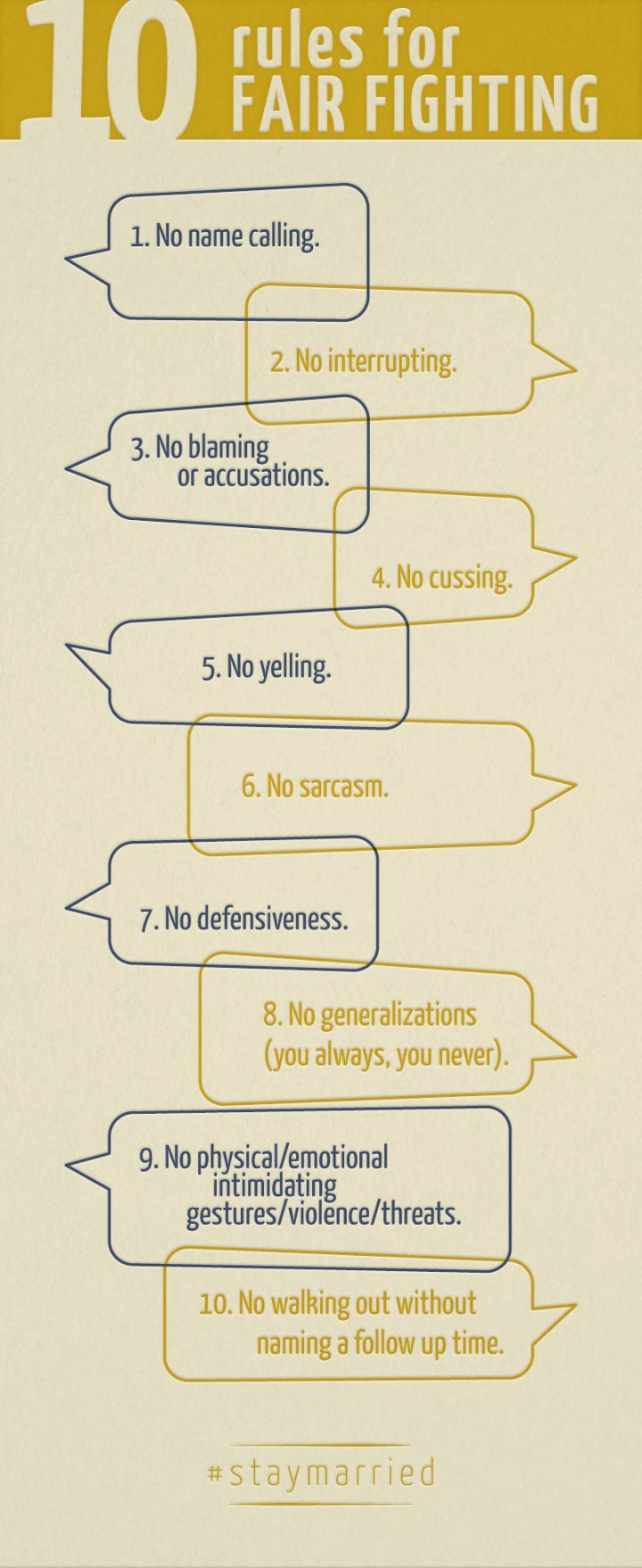
IF you can argue and stick to these rules, I don’t see anything wrong with arguing in front of your children. As mentioned before, everyone disagrees and argues. If you can do so following the rules above, you’ll be setting a good example of disagreeing appropriately. IF you CANNOT stick to the rules above, table the discussing/arguing/disagreeing for later. IF you find yourself in the middle of a disagreement in front of the kids and realize you (or your spouse) is not capable of following the rules above, STOP and take a break. You can say something like, “I cannot talk about this calmly right now. Let’s talk about it after the kids have gone to bed.” A statement like that is also a great thing to model for children!
Each One of Us Matters: A Poem About Acceptance
I wanted to share a fun little poem I wrote after reading multiple news stories about people being intolerant of differences. The style is partially inspired by all the Dr. Seuss books I’ve been reading my daughter. It presents the differences people may have in a silly way, which I think might help kids to understand that our differences don’t have to be a huge barrier to accepting each other.
People come in all sizes and shapes
Some love strawberries, some love grapes
Some are boys and some are girls
Some have straight hair, some have curls
Some have red hair, others have blonde
Some have lots of hair, some have none
Some have dark skin, some have light
Some need glasses, others have perfect sight
Some have two moms and others two dads
Some watch the football game, some just the ads
Some have tattoos, some have scars
Some see figures when they look at the stars
Some are friendly, others are shy
Some prefer cake, others prefer pie
Some walk on feet, some roll on wheels
Some ride on bikes, some in automobiles
Some like burgers, others never eat meat
Some have messy homes, others have neat
Some eat peanuts, some eat none
Some like the cold, while some like the sun
Some like donkeys, while others like elephants
Some work at schools, while a few will be president
Some are fast, while others are slow
Some like to sleep a lot, some are always on the go
Some sleep on their tummies, others sleep on their backs
Some live in mansions, some live in shacks
What’s important is not what sets us apart
What’s most important is what’s on the inside, in our heart
We should always be kind to everyone we meet,
Whether they like their food salty, sour, or sweet
Each one of us matters; we all are unique
Whether we have few or lots of freckles on our cheeks
Inside Out Feelings and Calming Strategies Worksheets
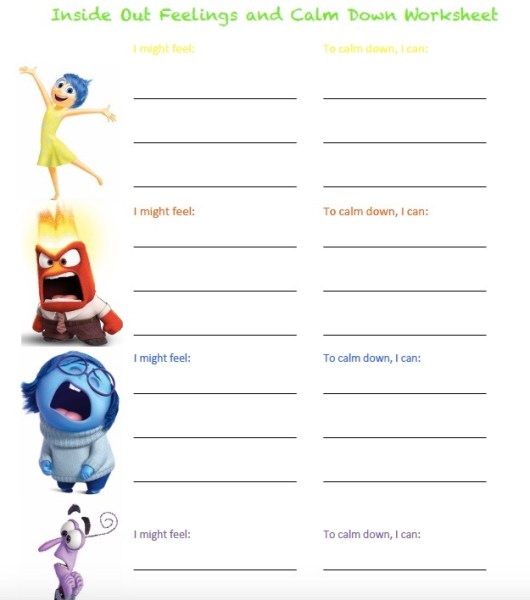
I love using Inside Out when working with kids on emotion identification and emotion regulation. It’s a fun movie and kids generally have a positive response when they see any of the characters from Inside Out, which mean the activity usually goes rather well.
I have created this worksheet to help kids identify how they’re feeling, how their body might be feeling, and some calming strategies they can use to help calm down. This is similar to the Inside Out Feelings Book that I posted, but this worksheet is all on one piece of paper… and the reason for that is that I thought it would be nice to print this worksheet out and put it somewhere in the home (on the fridge, maybe?) as a visual prompt from kiddos.
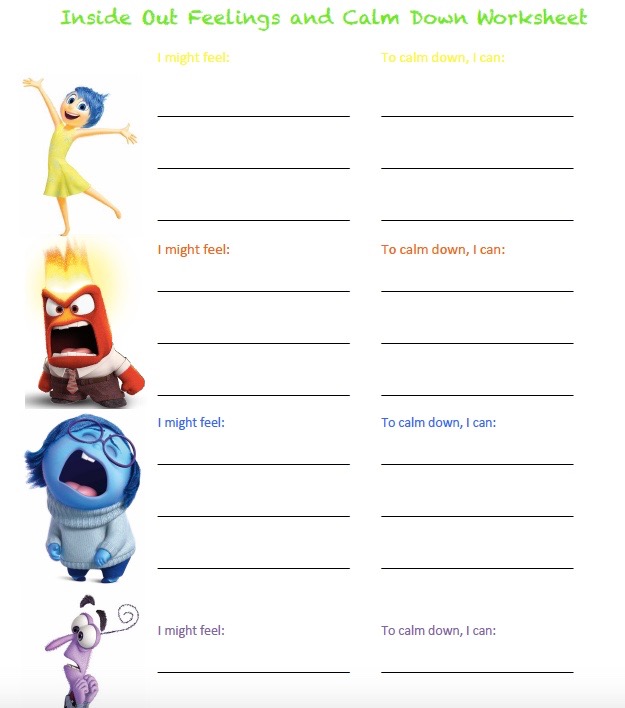
Download it here: Inside Out Feelings and Calming Strategies Worksheet
What I would do is sit down and help your kiddo fill in the blanks on the worksheet – for each of the four emotions (joy, anger, fear, sadness) there are 3 lines to write in body signals (how their body feels when they feel that emotion) and 3 lines to write an appropriate calming strategy. Some of the body signals and calming strategies might overlap, but it would probably be beneficial to make sure there’s some variety!
Once it’s all filled out, put it somewhere your kiddo can see it. Then, when you notice your child getting upset, prompt them to go find their Inside Out Feelings Worksheet, identify how they feel (help them, if needed due to age or development), then identify a calming strategy to use to calm down.
 Krista H Counseling