A Crash Course on Body Signals: What They Are and How to Use Them
When I have a kiddo struggling with emotion regulation, one of the first things I do is teach them about body signals. This isn’t knowledge that people are born with and EVERYONE (yes, adults as well!) can benefit from understanding what body signals are, how to identify them, and how to use them to help with overwhelming emotions.
What are Body Signals?
Body signals are the physiological symptoms that happen because someone is feeling a certain way. Basically, it’s your body’s automatic response to emotions. People can differ on what body signals they experience – so my body signals for angry feelings might be different than someone else’s. Also, some people may experience the same body signal for different (and opposite!) feelings.
Identifying Body Signals
Most people aren’t really aware of their body signals until they start thinking about them. Think back to the last time you were extremely happy/mad/sad/worried… do you remember feeling certain sensations in your body? A lot of times just THINKING about something that makes you feel a certain way can elicit some of these body signals. Common body signals for happy feelings include heart beating quickly, can’t sit still, and smiling. Some others I’ve heard from kids include “ants in pants,” singing, crying, and “want to run!” Common body signals for sad feelings include crying, slow movements, slumped shoulders, and talking in a quiet voice. Common body signals for angry feelings include clenched fists, red or hot face, yelling and heart beating quickly. Some others I have heard are “want to hit,” “want to kick,” sweating, growling/groaning, and stomping feet. Common body signals for worried/scared feelings include butterflies in stomach, heart beating quickly and loudly, and shaking.
How Is This Information Useful?
Once you are aware of your body signals for certain emotions, you can have a better awareness of when you need to do something to calm down. It’s called a Body SIGNAL for a reason – it’s a signal that you’re becoming overwhelmed with an emotion and need to use a calming/coping strategy to help you calm down and regulate those emotions. It takes practice though, especially for kiddos! If you see your kiddo clenching their fists or crying or with slumped shoulders, it might be time for a hug and to prompt them to do something that will help them feel better!
To Argue or Not to Argue (in front of your kids) + 10 Rules for Fair Fighting
All couples disagree/argue/fight. It happens, whether people want to admit it or not. And guess what? It’s healthy to argue and disagree, if you can do so appropriately. So let’s look at the pros and cons of arguing in front of your kids.
- Pro: It normalizes arguing. If your child NEVER sees their parents disagree or argue, they may grow up with unrealistic expectations and think they should never argue with a partner/friend/spouse.
- Con: It can cause stress on kiddos. I’ve had lots of kiddos disclose to me seeing parents argue or fight, and feeling worried about it.
- Pro (if you can argue in a healthy way): you get to model for your kids what healthy disagreements and resolutions look like – having you as an example makes it more likely that they can be healthy arguers.
- Con (if you can not argue in a healthy way): you set a bad example of arguing, which makes it way more likely that your kids won’t learn how to argue or disagree in a healthy way.
- Pro (for caregivers): it might help you argue in a more healthy way if you have an audience. Knowing that the children are watching might motivate you to disagree appropriately.
- Con: if the kiddos are around, it can be easier to pull them into the argument, which can have a negative effect on the child’s emotional state.
So to argue or not to argue (in front of your kids)? My opinion is that it’s Ok to argue/disagree in front of kids, ONLY as long as you can do so calmly and appropriately. What does “appropriately” mean? I like these rules I found online:
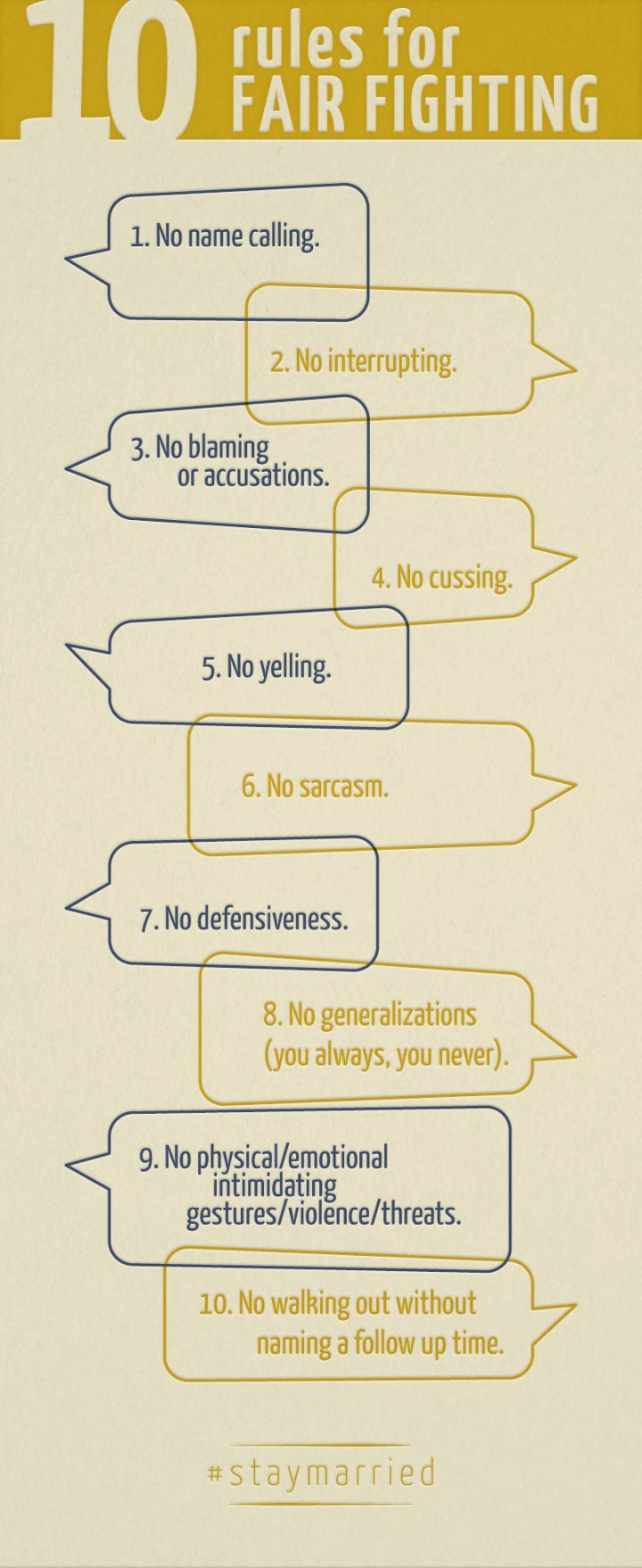
IF you can argue and stick to these rules, I don’t see anything wrong with arguing in front of your children. As mentioned before, everyone disagrees and argues. If you can do so following the rules above, you’ll be setting a good example of disagreeing appropriately. IF you CANNOT stick to the rules above, table the discussing/arguing/disagreeing for later. IF you find yourself in the middle of a disagreement in front of the kids and realize you (or your spouse) is not capable of following the rules above, STOP and take a break. You can say something like, “I cannot talk about this calmly right now. Let’s talk about it after the kids have gone to bed.” A statement like that is also a great thing to model for children!
 Krista H Counseling