Each One of Us Matters: A Poem About Acceptance

I wanted to share a fun little poem I wrote after reading multiple news stories about people being intolerant of differences.  The style is partially inspired by all the Dr. Seuss books I’ve been reading my daughter.  It presents the differences people may have in a silly way, which I think might help kids to understand that our differences don’t have to be a huge barrier to accepting each other.


People come in all sizes and shapes
Some love strawberries, some love grapes

Some are boys and some are girls
Some have straight hair, some have curls

Some have red hair, others have blonde
Some have lots of hair, some have none

Some have dark skin, some have light
Some need glasses, others have perfect sight

Some have two moms and others two dads
Some watch the football game, some just the ads

Some have tattoos, some have scars

Some see figures when they look at the stars

Some are friendly, others are shy
Some prefer cake, others prefer pie

Some walk on feet, some roll on wheels
Some ride on bikes, some in automobiles

Some like burgers, others never eat meat
Some have messy homes, others have neat

Some eat peanuts, some eat none
Some like the cold, while some like the sun

Some like donkeys, while others like elephants
Some work at schools, while a few will be president

Some are fast, while others are slow
Some like to sleep a lot, some are always on the go

Some sleep on their tummies, others sleep on their backs
Some live in mansions, some live in shacks

What’s important is not what sets us apart
What’s most important is what’s on the inside, in our heart

We should always be kind to everyone we meet,
Whether they like their food salty, sour, or sweet

Each one of us matters; we all are unique
Whether we have few or lots of freckles on our cheeks
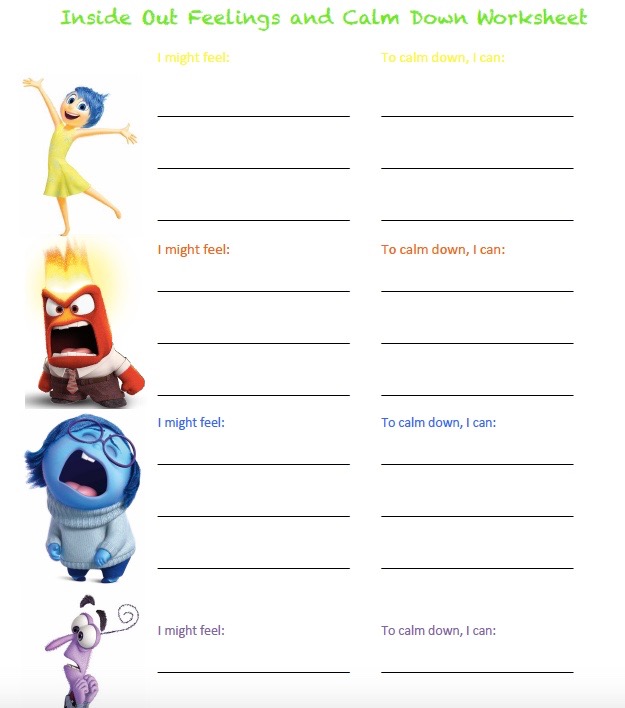
Inside Out Feelings and Calming Strategies Worksheets

love using Inside Out when working with kids on emotion identification and emotion regulation.  It’s a fun movie and kids generally have a positive response when they see any of the characters from Inside Out, which mean the activity usually goes rather well.

I have created this worksheet to help kids identify how they’re feeling, how their body might be feeling, and some calming strategies they can use to help calm down.  This is similar to the Inside Out Feelings Book that I posted, but this worksheet is all on one piece of paper… and the reason for that is that I thought it would be nice to print this worksheet out and put it somewhere in the home (on the fridge, maybe?) as a visual prompt from kiddos.

Screen Shot 2017-10-16 at 12.39.39 PM

Download it here: Inside Out Feelings and Calming Strategies Worksheet

What I would do is sit down and help your kiddo fill in the blanks on the worksheet – for each of the four emotions (joy, anger, fear, sadness) there are 3 lines to write in body signals (how their body feels when they feel that emotion) and 3 lines to write an appropriate calming strategy.  Some of the body signals and calming strategies might overlap, but it would probably be beneficial to make sure there’s some variety!

Once it’s all filled out, put it somewhere your kiddo can see it.  Then, when you notice your child getting upset, prompt them to go find their Inside Out Feelings Worksheet, identify how they feel (help them, if needed due to age or development), then identify a calming strategy to use to calm down.

Push-Pull-Dangle for Emotional Regulation

An amazing kiddo that I work with taught me a new calming strategy that can be used at while sitting in a chair.  I love this idea for two BIG reasons.  First, it can be done at school without being disruptive.  Second, it can be done discreetly – I have worked with lots of kids who don’t want people to see/know that they’re trying to calm down.

So the strategy is called “push-pull-dangle” and there are 3 steps.

  1. Put your hands on the top of your chair seat and push as hard as you can.  Depending on how long your arms are and how strong you are, your bottom might come off the seat.
  2. Put your fingertips on the underside of your chair and pull, so that you’re pulling your bottom/body into your chair seat.
  3. Let your arms dangle loosely at your side.

This seems to be a form of a muscle tension/relaxation calming strategy – you tense your muscles by pushing and pulling, then relax them by letting them dangle.

Give it a try yourself, and maybe teach it to your kiddo to give them another tool to use to help them stay calm when overwhelmed with negative emotions!